
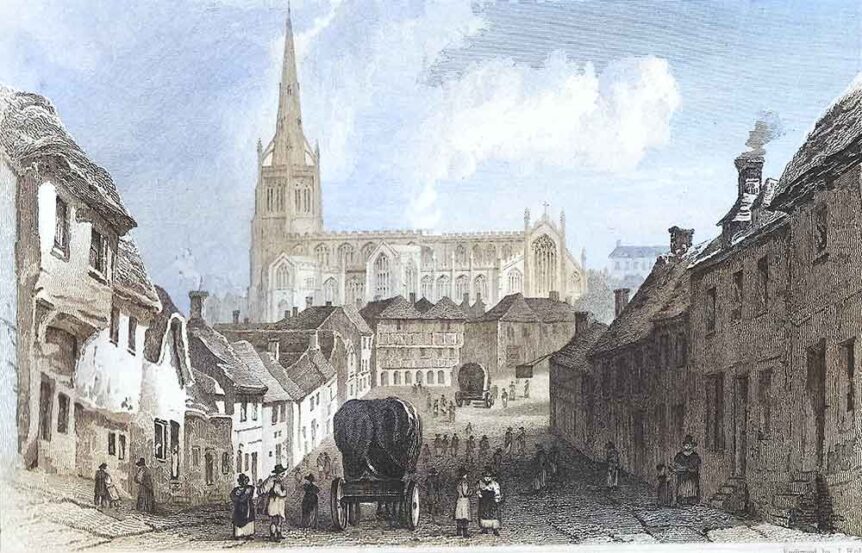
Fig. 1. above is of Thaxted circa 1831 by William Henry Bartlett.
© Martyn Everett
Reprinted from Saffron Walden Historical Journal No. 40- Autumn 2020
Summer 1835 in the market town of Thaxted, Essex (fig. 1). -The emaciated figure of William Crow was seen, half-naked, stumbling across the main street, with the help of another, younger man. Crow, a pauper, had left the workhouse three weeks earlier after refusing to sleep in the same room as a violent man who had recently tried to kill his own father. He had hardly eaten anything for at least three or four days, and died the following night.
Although he had tuberculosis, William Crow was widely believed to have starved to death, a victim of recent changes in the Poor Law, which restricted relief payments to inmates of the workhouse. He had forfeited relief when he left the workhouse.
Class tensions were already simmering throughout north-west Essex, exacerbated by the changes to the Poor Law. Earlier, on 6 July, an incident described in the Essex Standard as a ‘riot’ had occurred in Thaxted when nearly 30 paupers applied to Thomas Franklin, the overseer, for relief. He referred them to the relieving officer of the Board of Guardians, who, he said, would either provide them with work or relief. The relieving officer, unaware that they had already spoken to Franklin, refused, and the crowd became irate and abusive, although there was no actual violence. consequences. Eventually the men drifted off to the alehouse, but intoxicated they returned en masse to the overseer’s house at 11 o’clock at night and immediately ‘proceeded to demolish all the windows in the front of his house’, breaking 54 panes of glass. The incident also caused the relieving officer to tender his resignation.1
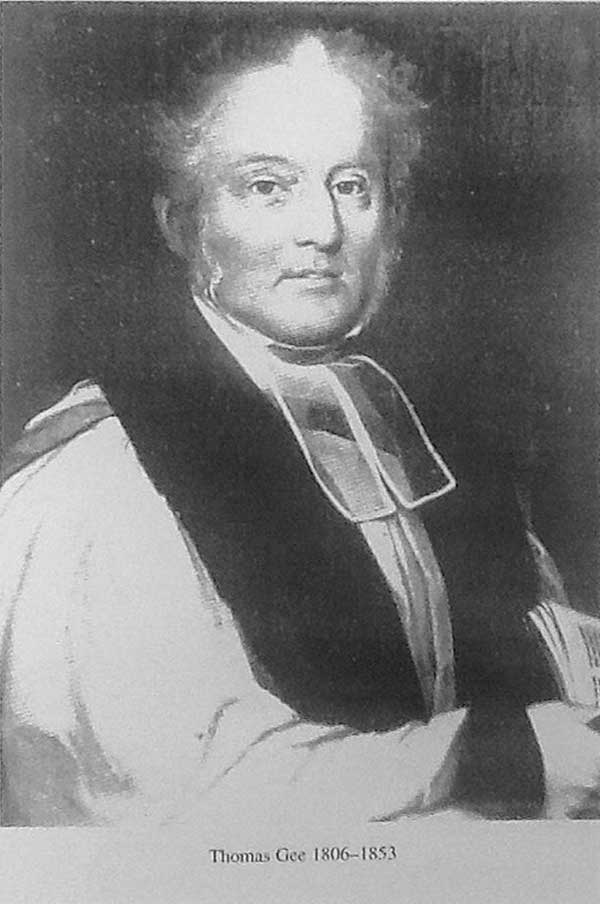
Rev Thomas Jee, the Vicar of Thaxted, was also a magistrate who, until the 1834 act, had a duty of supervision over local implementation of the poor laws (fig. 2). 2 he was so concerned about the situation that he wrote to the Poor Law Commissioners in London:
Vicarage House, Thaxted, July 8, 1835. Sirs,—With great regret, and as great reluctance, I feel it my duty to inform you, that everything is thrown into a state of confusion here, by the greatest mismanagement or neglect. The old workhouse has been pulled down in part, to be repaired, but not rebuilt; and no provision has been made nor care taken of the inmates, so that I very much feared the remaining part of the building would have fallen upon them.
There is no Governor, nor allowance, for them. The windows of one of the Guardians were broken the night before last; and the Relieving Officer has been under the necessity of resigning. The Guardians do nothing to remedy these evils, and I do not see where they will end. The poor have been driven to a state of desperation, that I cannot answer any longer for the consequences. I attribute a great deal of the mischief to the folly of Thos. Franklin, the acting Overseer.3
Politically, Jee was recognised as a reformer. In 1832 (the first election held after the Reform Act of 1832), Saffron Walden was chosen as the polling town for this part of the Northern Division of Essex, partly because Thaxted was perceived as too ‘rough’ for respectable voters to risk going there to vote. Reverend Jee was singled out for special mention in a Times editorial for riding into Saffron Walden ‘at the head of 200 good and true Reform electors’, 70 of whom were from Thaxted, while the remainder were neighbours and friends. The Times effectively held him responsible for the reform candidate winning by a margin of 130 votes.4
Jee had long been concerned about the working of the poor laws. In 1818 he wrote a lengthy overview of the problems with the then existing poor laws, which was published in The Pamphleteer series. Like many people of his class, Jee was concerned at the rising cost of poor relief, paid from the poor rate that was levied on the wealthier members of society, and also at the increasing number of able-bodied men receiving relief. In this small way, Jee contributed to the nation-wide debate on Poor Law reform that took place within the ruling class and resulted in the Poor Law Amendment Act of 1834.5
The 1832 election brought the Whigs to power, with a reform agenda that included changes to the Poor Laws, and in 1834 the Poor Law Amendment Act was passed by Parliament, with a number of serious consequences:
• Parishes were encouraged to centralise their activities in Unions for the Relief of the Poor, and replace small, older workhouses with new purpose-built buildings.
• Magistrates and the local Vestries which had previously administered poor relief were replaced by Guardians, under the direct control of the Poor Law Commissioners in London.
• Outdoor relief was ended. In future, outdoor relief was only for workhouse inmates. The poor, sick and unemployed had to enter the workhouse before they received any help.
• Families were strictly segregated in the workhouse, and new workhouses were constructed with utilitarian designs that enabled permanent supervision of the inmates.
‘The object in building those unionhouses being to establish therein a discipline so severe and repulsive, as to make them a terror to the poor, and prevent them from entering.’ Charles Mott, Assistant Poor-law Commissioner, quoted in Kydd, S., The History of the Factory Movement, vol II (1857), p. 78.
If workhouses became more like prisons, it was intentional. Historian E. P. Thompson records one assistant commissioner as saying, ‘Our intention is to make the workhouses as like prisons as possible’.6 This attitude was not confined to the bureaucrats who administered the Poor Laws, but was widespread among the ruling class. Arthur Young, an extremely influential agronomist, and a driving force for the implementation of the enclosure of the commons, expressed the dominant attitude: ‘Everyone knows that the lower classes must be kept poor or they will never be industrious… they must (like all mankind) be in poverty or they will not work’.7
The changes brought by the Act added to the grievances of the impoverished labourers and workless poor. Many Conservatives who disliked Whig reforms on principle, and local magistrates who had seen their power diminish, also opposed the changes and the new workhouse system that the Act introduced. Initial opposition to the Act was spontaneous, sporadic, mainly confined to southern England and quickly burnt itself out – although it lasted longer in parts of Norfolk, Suffolk and the West Country than elsewhere. It persisted even longer in northern England, where opposition was rooted in trade associations and pre-existing networks of radicals.8
Jee was determined not to let the circumstances of Crow’s death be forgotten and pressed for an inquiry, also personally requesting the attendance of the Lord Lieutenant Viscount Maynard and two other Essex magistrates, Reverend Chesshyre of Little Easton, and Revd William Toke. There were over 20 witnesses who gave evidence to the inquiry, and some of the testimony was damning.
Concerned that there might be a cover-up of the circumstances surrounding the pauper’s death, Jee took the precaution of writing to the ‘High’ Tory paper John Bull and also The Times, enclosing his July letter to the Poor Law Commissioners, which was published in full, with several depositions he had taken from witnesses who had met with and spoken to Crow during the last days of his life. on 14 October 1835 , The Times wrote a damning report based on the evidence that Jee supplied:
Mr Jee, a magistrate, has forwarded to us copies of the examinations of four different persons sworn to before him- relating to the case – the melancholy and miserable case – of William Crow, who literally died of want in the parish of Thaxted. This unfortunate old man, age 73 years of age had a claim on the parish for relief, and was turned out of the workhouse for refusing to sleep with a man subject to epileptic fits, a dangerous lunatic who was kept chained, and who was lately given into custody in consequence of an attempt on the life of his own father. In their treatment of Crow the parish authorities appear to have been guilty of a double offence– namely, a misdemeanour under the 45th section of the Poor Law Amendment Act, which prohibits the detention of lunatics in work for a longer period than 14 days, and an outrage on humanity as well as law in expelling a pauper who had an undoubted right to refuse becoming the bedfellow of a lunatic. What ensued? Poor Crow, after paying for his lodging and washing, had just two quartern loaves and one penny per week to live on. That he sunk into the grave a wretched skeleton, that he perished for want of proper and sufficient food, is established upon the testimony of four credible witnesses, and probably might have been sworn to by half of the parish. Those who have the care of the poor in the parish of Thaxted have contrived to do what might have been thought a matter of no small difficulty – to aggravate by maladministration the evils necessarily flowing from the Poor Law Amendment Act.9
Following the Inquiry and on hearing the evidence given by witnesses, the town’s labourers were so angry that several parish officers were frightened enough to go to the magistrates, and swore that they feared for the safety of their property and their lives. A number of special constables were sworn-in to keep order, but then the Poor Law Commissioners wrote to the Guardians and Overseers of the Poor in Thaxted stating their conclusion that:
The rumour… spread abroad in the Parish of Thaxted as to the death of the deceased William Crowe having been occasioned or hastened by want of sufficient sustenance and support is wholly unfounded and untrue; and that the Lord Lieutenant and the other magistrates present agreed with this conclusion.. and that no blame can be thrown upon any of the persons charged with the administration of relief to the poor of Thaxted from any circumstances connected with this occurrence.
Not every newspaper followed The Times. The Chelmsford Chronicle, for example, believed the Guardians were cleared of all blame:
Now, laying aside the authority of the Poor Law Commissioners, who some persons may think are interested in putting a good face upon the matter, the names of Lord Maynard, Mr Chesshyre, and Mr Toke, are to us a sufficient guarantee that the case was fully and partially investigated, and decided upon a deliberate consideration of its own merits.10
With the Guardians officially exonerated the unrest in Thaxted subsided and the special constables were stood down. But Jee believed that the expulsion of Crow from the workhouse, and the want of sufficient food for someone of his age in a state of poor health had contributed to the pauper’s death, and was not prepared to let the matter rest. He took up the case of the illegal detention of the epileptic man in the workhouse at the Essex Quarter Sessions, requesting an indictment be preferred against the Parish Officers, but his fellow magistrates avoided the issue, saying that it was a matter for the Guardians.11
Riled by Jee’s use of the national press to pursue his cause, the Poor Law Commissioners took the unusual step of circulating copies of their letter to the Thaxted Guardians to several local and national newspapers, including The Times, where it was published on 23 October 1835.
Then, against a background of sporadic anti-poor law incidents in the surrounding area, including suspicious fires at the workhouses in both Saffron Walden and Bishop’s Stortford, Lord John Russell, the Home Minister who had responsibility for the implementation of the Poor Law, operation of workhouses, and the supervision of the nation’s magistrates, sent a letter to Lord Braybrooke, the Deputy-Lord Lieutenant of Essex. In the letter he stated his agreement with the opinions of the Lord Lieutenant and the other magistrates at the enquiry, that Crow’s death
‘was the natural effect of a long-term pulmonary consumption, and was not attributable to neglect or ill usage by any person employed in administering relief to the poor’. He went on to state that: The contrary statements so studiously put forth and circulated by the Rev Mr Jee have a manifest tendency to impede the working of the Poor Law Amendment Act, and to endanger the persons and property of the officers who are charged with the duty of carrying its provisions into effect. ‘I must therefore request your Lordship to caution seriously the Rev Mr Jee as to the probably consequences of the course he is so pertinaciously pursuing and to point out to him that it is most peculiarly his duty, while acting in His Majesty’s commission of the peace, to assist by his own exertions in giving effect to the law of the land, and to afford every facility to those intrusted with its administration in the discharge of the duties which that law imposes upon them.
Braybrooke wrote to Jee, enclosing Russell’s letter, and restated its contents but in such a way that it is obvious to a careful reader, that he had a degree of sympathy with Jee for his stand and was avoiding direct criticism of his actions.12
Unusually, both letters were published in The Times, possibly as a way of intimidating Jee, but he was not a man to cave in without a fight. He replied to Braybrooke’s letter on 6 January 1836, asking to know what charge had been made against him. He denied opposing the Poor Law Amendment Act, although ‘I certainly object to the mode of carrying that law into effect, as it is adopted here, and I have good reason to object; but that is a very different thing from resisting or opposing the law. .. That some of the aged poor of this parish have been treated with great harshness and neglect, no man who has any regard for veracity can deny.’
Far from being intimidated by russell’s threat to sack him from his position as magistrate, he wrote defiantly:
‘If I may not be allowed to administer the laws according to my own principles of justice, and the best advice I can in doubtful cases, I shall decline to administer them at all. I never solicited the appointment of a justice of the peace … but this I know – I have done my duty firmly and uprightly on all occasions and no single magistrate has enforced the laws with more vigour and success in suppressing riots and bringing daring offenders to justice, than myself. My house has often resembled a police office for many weeks, in all but the fair recompense for duty done. If I have found fault with the unfeeling and improper conduct of the guardians and overseers of the poor in my parish, who have rendered the new poor law odious and offensive to the people in general, I do not think I have committed any offence against the law of the land, which does not, as I am advised, require such extreme severity. But if, in using my most conscientious endeavours to mitigate that severity, I have done wrong, I have no desire whatever to retain an office which has been a heavy burden, and which was conferred upon me without any application on my part…13
Incensed by the Commissioners’ attacks on Jee, the magazine John Bull published an article outlining the evidence at the inquiry:
Amongst the evidence, there appears thanks to the exertions and skill of Lord Maynard, Lord Lieutenant for the county THIS – extracted, with difficulty, from the God of Physic for half the parish of Thaxted: that Crow, being 73, and pulmonary consumptive, tea, butter, cheese, and bacon, were absolutely necessary for him. So swears Mr Marsh, the Doctor! Mind that. MIND MORE that Lord Maynard asked the Doctor if Crow could get tea, butter, cheese, and bacon for a week, out of his four-pence, all he had in money after paying one shilling in rent; ten pence of his two shilling and two-pence being in bread, and ten pennyworth of bread cheap, too cheap as bread is – being not too much for a week for a pulmonary consumptive man of 73.
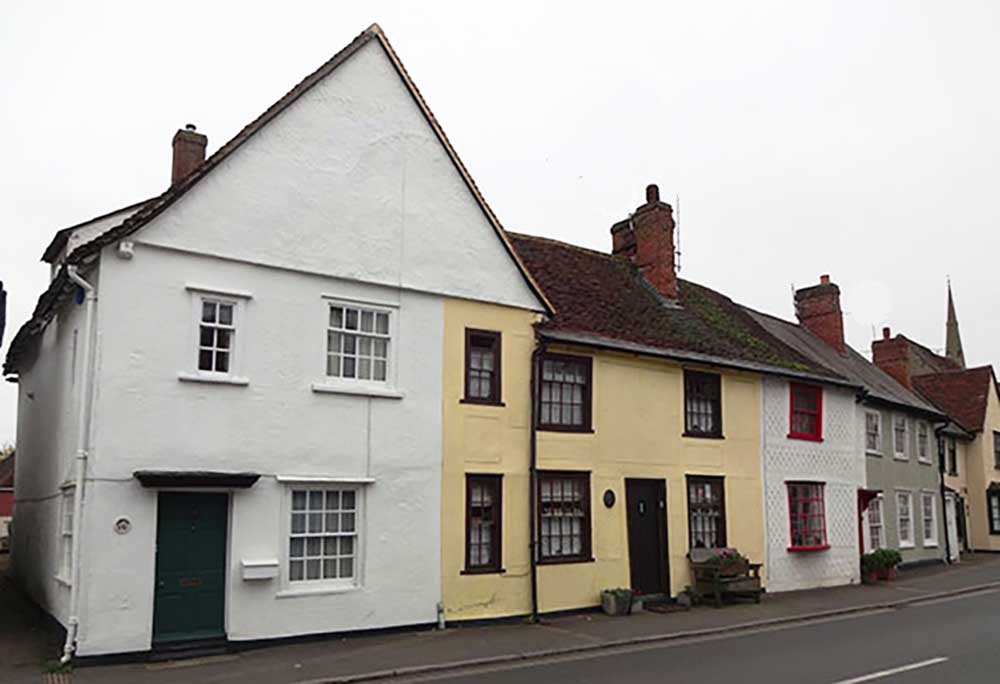
John Bull then went on to describe the structural work on Thaxted Workhouse (fig. 3). This was within six yards of the fence round Jee’s garden, suggesting it was a form of reprisal:
‘... the common sewer has been made within eight yards, and the grinding mill about 15 yards, immediately under the best bed-room windows of the parsonage, and within 20 yards of the clergyman’s bed! – so that the Reverend Gentleman will have constantly under his view all the rogues, vagabonds and prostitutes of the district, and all the noises, discords, and stench incidental to such a place under his nose and before his eyes.’14
Jee did not resign, but continued to be a thorn in the flesh of both the Guardians and the Poor Law bureaucracy. Then in September, the Poor Law Commissioners appointed assistant commissioner Colonel Thomas Wade to investigate poverty and unemployment in Thaxted, and Jee submitted detailed evidence to him, pointing out that lack of work had resulted in 51 unemployed labourers going gleaning ‘during three weeks of Harvest month’. (Gleaning was traditionally carried out by women and children, who would be forced to compete with the men in gathering the scattered corn.) He drew attention to the number of robberies and other crimes and offences, ‘excluding poaching and assault cases’ committed in Thaxted, since the introduction of the Poor Law Amendment Act – from four cases in 1833 to 36 in 1836, and at least one incident of incendiarism.
Viscount Maynard also sent a letter to Wade, expressing his opinion that the New Poor Law had been damaging in its impact on Thaxted, reducing wages. In his report, Wade accepted opinions from parish officers discrediting Jee’s evidence and dismissed the concerns expressed by both Jee and Maynard. Thaxted had not suffered more than neighbouring parishes and no one ‘genuinely industrious’ was on Jee’s list of gleaning labourers. He recommended that the single labourers should emigrate to the manufacturing districts of Lancashire.15
At the beginning of October 1836 Jee wrote to John Bull again, summarising his evidence to Wade’s enquiry, and revealing that the Thaxted Guardians had refused to pay the sexton for digging the graves of two paupers, and for other burial fees, and had refused to pay the constables for acting on his (i.e. Jee’s) orders in clearing public houses, when necessary, and apprehending trespassers and vagabonds: ‘Under these difficult circumstances I would only ask how am I, as a Magistrate, to act? And what am I to do to prevent the dreadful increase of crime?’16
In 1837 Jee published a volume of his sermons: ‘Sermons on some of the doctrines and duties of the Christian religion: addressed particularly to political economists and guardians of the poor’, in which he wrote in the Preface: ‘It is evident that if the principles of what is called Political Economy are to be acted upon with unmitigated severity towards the poor, they will be totally subversive of true Christian charity and of that “faith which worketh by love’ and in the second sermon: ‘Since we have the poor always with us, it is right to know and to do, our duty towards them.’ 17
What can we learn from the events surrounding the death of the pauper, William Crow?
The ‘reform’ of the Poor Laws was driven by the perceptions and interests of the ruling elites. The poor were seen as idle so should be forced to work by cutting relief payments. The cost of poor relief was too high and must be cut. In order to effect the changes a harsher and more centralised regime was introduced. Even those, like Thomas Jee, who objected to the harsh implementation of the new poor laws failed to recognise that the causes of poverty stemmed from low wages (seven shillings a week for an agricultural labourer in Thaxted), the piecemeal loss of common lands, the decline in home-based industries (such as weaving) and restrictions on customary rights (gleaning and wood-gathering). In the south of England, the labouring poor lacked not only a voice, but also in the wake of repressive legislation (the Combination Acts and Conspiracy laws) and the physical suppression of the Swing riots, they lacked organisation.
Parish officers and Poor Law commissioners had a common interest in glossing over the harshness of the new regime, and indeed saw them as beneficial. Reports from the Poor Law unions in north-west Essex in 1837, all stressed the reduction in the costs of relief, and also an ‘improvement’ in the ‘manners’ (i.e. subservience) of the labourers. Thaxted workhouse was closed and auctioned in 1841 – but this did not signal an improvement in the plight of the paupers of Thaxted, who subsequently had to go to the workhouse in Dunmow.18
References
1. Essex Standard, 10.7.1835, p.2.
2. Thomas Jee was the second son of Richard Gee of Caldecote, Warwickshire. Admitted to Pembroke College, Cambridge, he matriculated in 1794, and was awarded his Ba in 1798. Ordained Deacon in 1798 when still spelling his name ‘Gee’, he became a priest in August 1800, by which time he was using the name Jee. He became vicar of Thaxted in 1806, a position he retained until his death in 1853.
3. John Bull, 4.10.1835, pp 5-6.
4. Cooper, J., The Well-Ordered Town (2000), pp.52-3; ‘Political Parsons’, The Times, 25.12.1832, p.3. 18
5. Jee, T., ‘Practical observations on the management of the poor, and the laws relating to them’, The Pamphleteer (1817).
6. Thompson, E. P., The Making of the English Working Class, 1968 [reprinted 1986] p.295.
7. Quoted in Mingay, G. E. (ed). Arthur Young and his Times (1975), p.140.
8. For a history of the anti-poor law movement, see Edsall, N. C., The Anti-Poor Law Movement, 1833-44 (1971).
9. The Times, 14.10.1835, p.2.
10.The Times, 23.10.1835, p.4; Chelmsford Chronicle, 16.10.1835, p.2; revd William Toke & Revd J.P. Chesshyre; Chelmsford Chronicle.
11. The Times 21.10.1935.
12.‘Letter from Lord John Russell to Lord Braybrooke’, & ‘Letter of Lord Braybrooke to the Rev. T. Jee’, The Times, 12.1.1836, p.3.
13. Letter of Thomas Jee to Lord Braybrooke Essex Herald, 19.1.1836, p.1 reprinted in The Times 25.1.1836, p.3.
14. John Bull, 24.1.1836, p.6.
15. The National Archives: HO 73/51/35.
16.‘Crime and Poverty Statistics’, John Bull, 3.10.1836, p.6.
17 Jee, T., Sermons on Some of the Doctrines and Duties of the Christian Religion (1837), pp. iii-iv, 12.
18. See, for example, Reverend Chesshyre’s report on the Dunmow union, included in ‘The New Poor Law in Essex’, Essex Standard, 27.1.1837, p. 4; Drury, h., Essex Workhouses, 2006, p.116.
Images: Fig. 1 by courtesy The Gibson Library, Saffron Walden.
Fig. 2 by courtesy Bruce Munro.
Fig. 3 by courtesy Jill Palmer.