
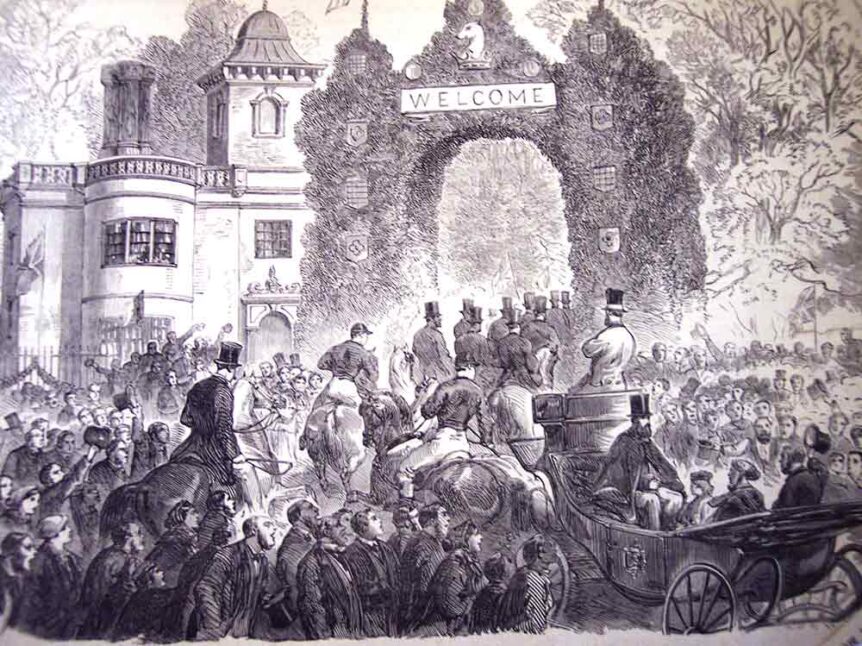
Note the featured image above (Fig.1) is ‘Return of the 5th Lord and Lady Braybrooke to Audley End, 1866’
© Sarah Kirkpatrick. This article was first published in the Saffron Walden Historical Journal No. 34, Autumn 2017
The recent death of the 10th Lord Braybrooke, and subsequent national and local press stories around the title only going to a male heir, a distant cousin, Richard Ralph Neville and not to any of the 10th Lord’s daughters, brings into focus the traditional aristocratic practice of only a male heir being able to inherit a title. There is the additional quirk of the estate and title not being bound together, and the estate passing to the granddaughter of the 7th Lord Braybrooke. This in turn has prompted this review of the Lords Braybrooke and their family history.
As ever with history, it is where to start. In this case, as with most Audley End family history, the pivotal year is 1745. This is the year that Henry Howard, 10th Earl of Suffolk, died, with no will and no children. The title went to a cousin, who was already Earl of Berkshire, and that is where it is today. The estate was inherited by the heirs of James, 3rd Earl of Suffolk, under his settlement of 1687. These heirs were Mrs Anne Whitwell and her sister, Elizabeth, Countess of Portsmouth (both née Griffin) and George Hervey, later Earl of Bristol. Mrs Whitwell and the Countess of Portsmouth inherited the estates around Saffron Walden and George Hervey inherited the other half of the estate, mainly around Great Chesterford.
The House, which belonged to the crown and was known as New Palace at the time of the 3rd Earl’s settlement, went to the Earl of Effingham, the 7th Earl of Suffolk’s legatee. The Countess of Portsmouth bought the house in 1751 from Effingham, thus combining once again the house and half the estate. She had no children and her chosen heir for Audley End was her sister Mrs Whitwell’s eldest son John, who changed his name to John Griffin Griffin by Act of Parliament in 1749, as a condition of becoming his aunt’s heir and inheriting the house and estate. It became part of Sir John’s life’s work to buy back the remaining half of the estate, a feat which was eventually completed by the 2nd Lord, some 50 years later.
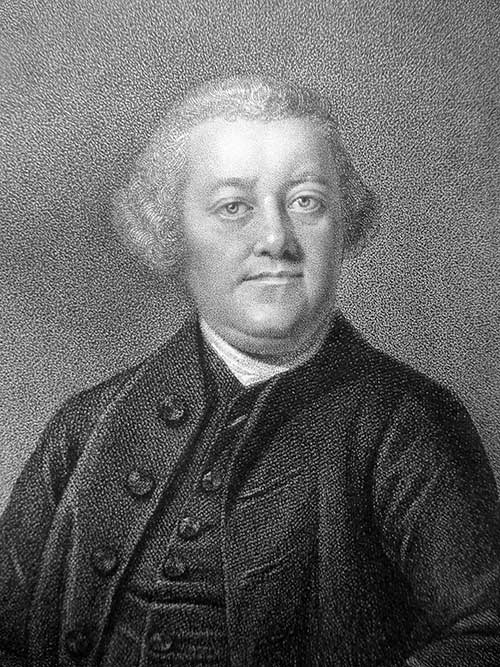
Audley End was not the only house in the Countess’ gift. Her first husband was Henry Grey of Billingbear. Grey had been born Henry Neville, a second son, who changed his name to inherit from his maternal grandfather and also ended up inheriting his father’s house on the death of his elder brother, confusingly called Grey Neville. The Neville/Grey brothers had a sister, Catherine Neville, who married Richard Aldworth of Stanlake, and it was this marriage which was to prove fruitful. Catherine’s son, Richard Neville Aldworth, first inherited Stanlake from his father and then inherited Billingbear in 1762 on the death of his aunt, the Countess of Portsmouth, and changed his name to Richard Neville Neville (Fig. 2).
Such is the power of a formidable aunt and a will. The Countess of Portsmouth’s will also made the provision that if neither Sir John Griffin Griffin nor any of his eight siblings had no children, Audley End would go to Richard Neville Neville and his son, Richard Aldworth Neville, but whoever inherited Audley End would have to be called Griffin.
1st Lord Braybrooke
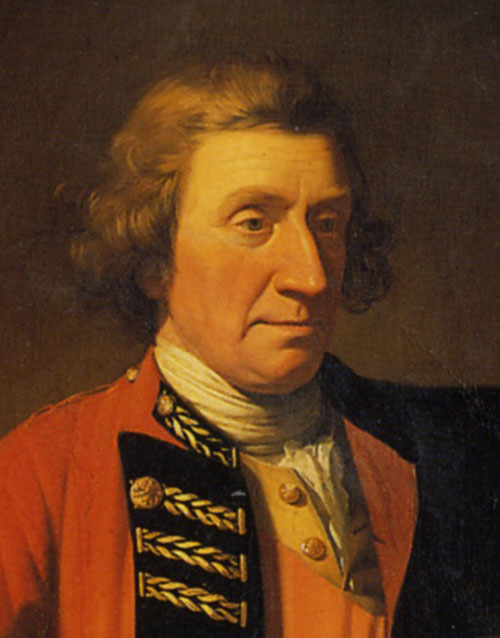
Sir John Griffin Griffin became 4th Lord Howard de Walden in 1784 but the heir for that title was already set, going to the earl of Bristol (Fig. 3). Sir John perhaps felt he would like to have not only Audley End to leave but a title for his then adopted heir, Richard Aldworth Neville, when by the 1780s, it was clear that he would have no children of his own (despite having been married twice), nor would his brother, the thrice married William Whitwell. Sir John Griffin Griffin was created Lord Braybrooke of Braybrooke in September 1788 with special remainder to Richard Aldworth Neville (meaning that Neville would inherit the title of Lord Braybrooke). The choosing of Braybrooke as part of the title reflected Griffin’s descent from the Lords Griffin of Braybrooke, rather than having either an Essex or Berkshire connection.
Sir John called in Robert Adam to create a suite of rooms on the ground floor and . Lancelot ‘Capability’ Brown to landscape the grounds.Neville would be first and indeed only owner of Audley End not descended from Sir Thomas Audley. Neville’s wife, however, was: Catherine Grenville was descended via a rather indirect line from Theophilus Howard, 2nd Earl of Suffolk. They were married in the chapel at Stowe in 1780 and had ten children. The first twin infants, born and died 2 March 1781, were followed by four sons and four daughters. Catherine never became Lady Braybrooke, as she died in 1796.
2nd Lord Braybrooke
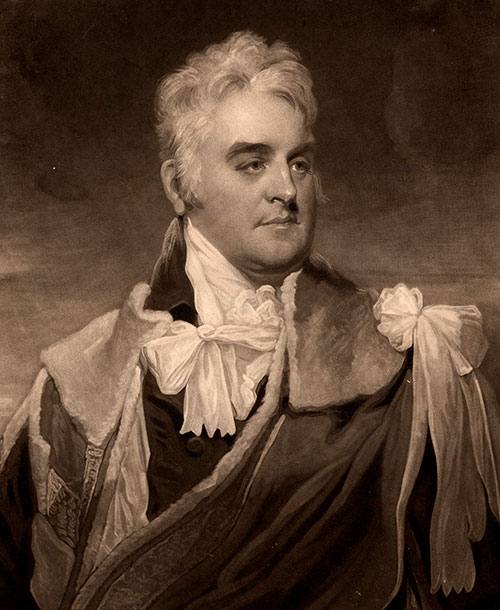
Five months later Sir John Griffin Griffin died on 25 May 1797, at which time Richard Aldworth Neville became 2nd Lord Braybrooke and changed his name to Griffin (Fig. 4). He did have to wait until 1802 to fully inherit Audley End, as Sir John’s last sister, Mary Parker and her husband had been left it for their life, Dr Parker dying in 1802.
The 2nd Lord Braybrooke’s four sons were unfortunately soon halved in number, as William, the youngest, died aged seven in 1803 and Captain Henry Neville died in the Peninsula War in 1809. This left Richard, the eldest, born in 1783 and George, born in 1789, both of whom married and had families.
George Neville went into the church and was lucky enough to inherit from an uncle and add Grenville to his name.He was Master of Magdalen College, Cambridge, from 1813 to 1854 and Dean of Windsor. He and his wife, Lady Charlotte Legge, had ten children: three sons and seven daughters. One son, Captain Glastonbury Neville Grenville, died in India in 1858, leaving two sons, Ralph and William, who both married and had large families.
3rd Lord Braybrooke
Richard became 3rd Lord Braybrooke in 1825, inheriting Audley End and Billingbear and changing his name to Griffin (Fig. 5). The 2nd Lord Braybrooke chose to be buried in Waltham St Lawrence, the church of his Neville ancestors. The 3rd Lord Braybrooke had married Lady Jane Cornwallis in 1819, and they had eight children in ten years, the portraits of whom can be seen on the nursery walls at Audley End today. The 3rd Lord wrote the first history of Audley End and Saffron Walden, published in 1836, and created the suite of rooms off the Saloon, which are the principal rooms that visitors see today. He was also the first editor of Samuel Pepys’ diary.
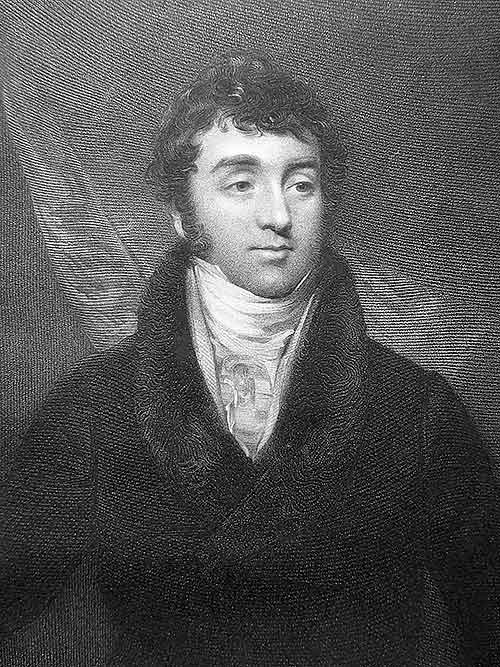
The 3rd Lord had five sons, but two, Captain Henry Neville and Cornet Grey Neville, were killed in the Crimean War, a week apart in 1854. It was not until 1855, when the 3rd Lord Braybrooke was 72, that his first grandson was born, Henry, and two years later a second grandson, brother to Henry, Grey was born. If no grandsons had been born, then the next heir after the 3rd Lord Braybrooke’s sons would have been the sons of George Neville Grenville. The 3rd Lord’s grandsons were the sons of the Reverend Latimer Neville, now the youngest surviving son.
4th Lord Braybrooke
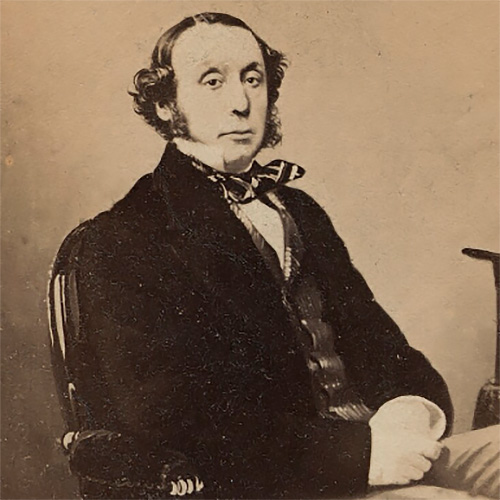
It was during the 3rd Lord’s time that, somehow, the family managed to change the countess of Portsmouth’s will, stating all owners should be Griffins, and reverted to the name Neville, so when the 3rd Lord Braybrooke died in 1858, he was succeeded by his eldest son, Richard Cornwallis Neville (Fig. 6). The 4th Lord Braybrooke had two daughters, Catherine and Mary, neither of whom could inherit the Braybrooke title. The 4th Lord spent five years in the Grenadier Guards, including a posting to Canada.
On returning home, he developed an interest in archaeology and had his own museum room at Audley End and also started the Natural History Collection, an interest he shared with his brother Charles. The 4th Lord must have died unexpectedly at the age of 40 in 1861, as he left no proper will but ‘paper writings marked ‘a’ and ‘b’, which were proved at the principal registry by the oath of Beilby Richard, Baron Wenlock (a first cousin) and both remaining brothers.
5th & 6th Lords Braybrooke
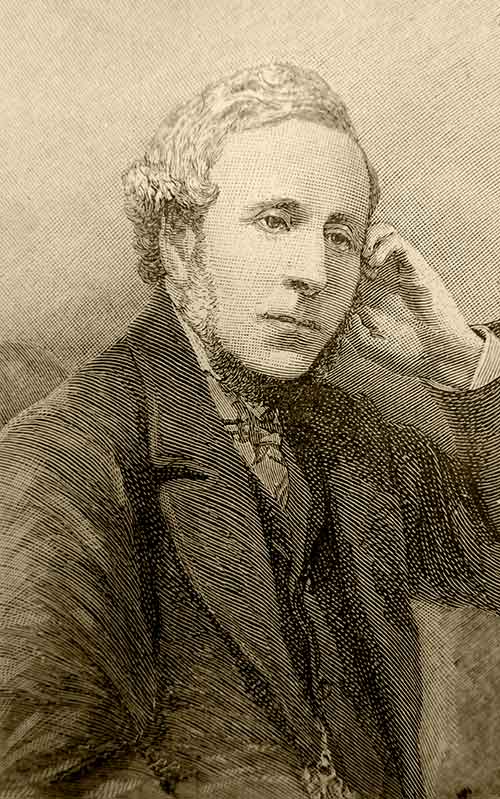
Charles, 5th Lord Braybrooke, who succeeded his brother, had one daughter, Augusta, who was born in 1860 and married Richard Strutt in 1879 and had three children (Fig. 7, see also Fig. 1). Augusta died in 1902, and her eldest son, Lieutenant Richard Neville Strutt was killed in 1915 in the First World War. The 5th Lord held the estate during the challenging time of the 1870s agricultural depression and he increased import of cheap, foreign food.
When the 5th Lord Braybrooke died in 1902, his younger brother, Latimer, now himself aged 75, inherited Audley End and the title.
Revd Latimer Neville had ‘succeeded’ his uncle, Revd George Neville Grenville as Master of Magdalene in 1853 and was Master of the College and Rector of Heydon for 50 years. However, Latimer, 6th Lord Braybrooke, died in 1904, having held the title for only about 18 months. There were thus two lots of death duties and his successor, his 48- year-old son Henry (the first of the 3rd Lord Braybrooke’s grandsons) had to retrench. Audley End was let from 1904 to 1912 (Billingbear had been let since 1841, after the death of the 2nd Lord Braybrooke’s eldest daughter, Catherine).
7th & 8th Lords Braybrooke
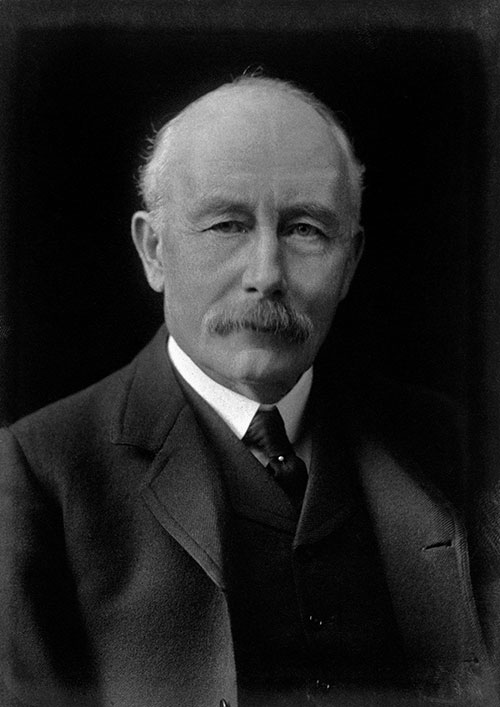
The 7th Lord Braybrooke married Emillie Gonin in 1898 but there were no children, and she died in 1912 (Fig. 8). At this time, his heir was his brother, Revd Grey Neville and his son, Henry Seymour Neville, born in 1897. Reverend Grey and his wife Mary had already had five daughters and another son, Grey. in 1917, the 7th Lord Braybrooke married Dorothy Lawson, and they were blessed late in life with three children: Richard, born in 1918, George, born in 1920 and Catherine, born in 1922, all christened at St Mary’s church in Saffron Walden and all lived at Audley End. It was during this time that Billingbear, the Nevilles ’ family home, was sold and the estate consolidated in Essex.
All seemed set fair for the future, but then the Second World War arrived. Richard Neville, the 7th Lord’s eldest son, joined the Grenadier Guards and George, the second son, joined the navy. The 7th Lord Braybrooke wrote a will in 1917, probably on his marriage to Dorothy and in 1941, he added a special covenant that if any subsequent Lords Braybrooke had no son, the estate would revert to his descendants. The title would continue down the male line, but he could leave the estate where he wished, as the title and estate were not bound together. He died on 9 March 1941, aged 86.
His eldest son, Richard, became 8th Lord Braybrooke. Six weeks later, the House was requisitioned by the Ministry of Works, and from May 1942 to December 1944, was the headquarters of the Polish section of the Special Operations Executive (SOE). On 12 August 1941, aged 21, George Neville was killed on North Atlantic convoy duty. The 8th Lord Braybrooke was killed in action, aged 24, on 23 January 1943 in Tunisia and is buried in Medjez-el-Bab Commonwealth War Graves cemetery in Tunisia. Once again, there were two lots of death duties. Lady Dorothy was executer to first her husband’s will and then her eldest son’s will. She and her daughter, Catherine, subsequently lived in Littlebury.
9th & 10th Lords Braybrooke
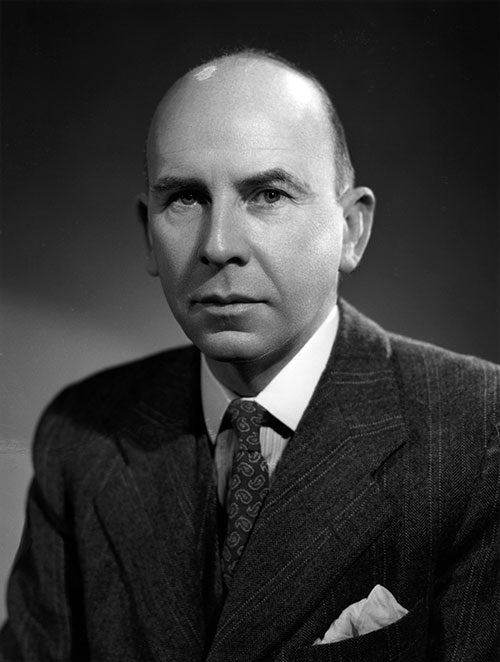
Henry Seymour Neville, cousin to the 8th Lord Braybrooke and nephew of the 7th Lord Braybrooke, inherited in 1943, aged 46 (Fig. 9). He had never lived at Audley End, and the decision was made to sell the house to the Ministry of Works but retain the land. The vast majority of the contents of the house still belong to the family.
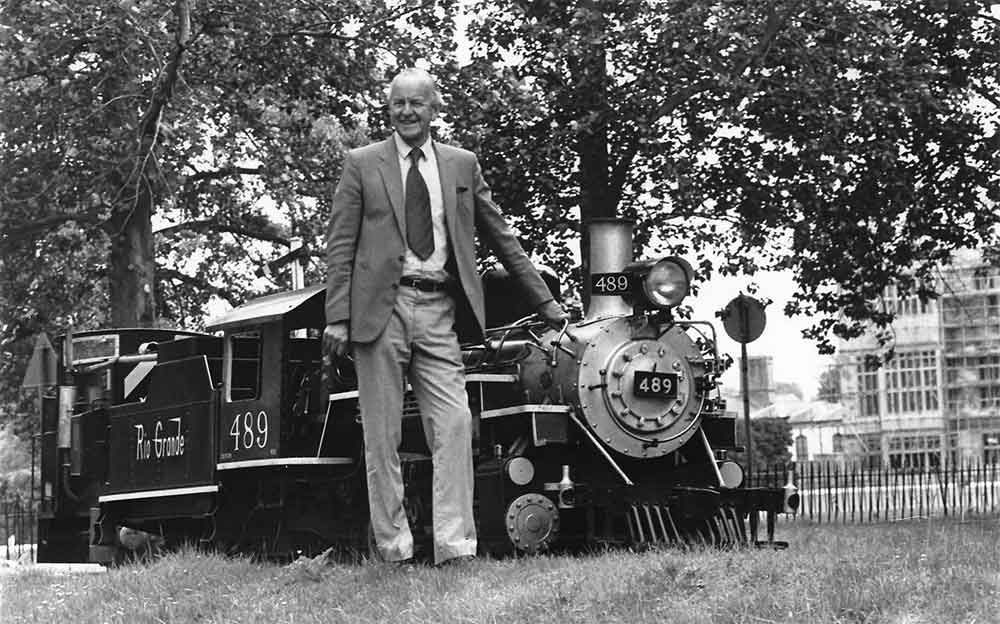
He died in 1990, and his son, Robin, the 10th Lord Braybrooke, inherited (Fig. 10). The 10th Lord’s passions were trains and planes, and the miniature railway at Audley End was his creation. He was married three times, with five daughters by his first wife, Bobby and three by his second wife, Linda. With the birth of Lucinda Neville, the eighth daughter, in 1984, there existed a strong possibility that the special covenant of 1941 might come into force. The 7th Lord Braybrooke’s only surviving descendant was his daughter Catherine, who had married Gordon Ruck in 1954 and had a daughter, Louise, born in 1959. Mrs Ruck died in 2004, and so the 7th Lord’s only descendant is his granddaughter, Louise Newman. As it has turned out, this has come to pass on the death of the 10th Lord Braybrooke on 5 June 2017 at the age of 85, the 7th Lord Braybrooke’s granddaughter has inherited the estate.
11th Lord Braybrooke
What of the title? Mostly titles went from male to male to preserve the family name and, for practical purposes, to protect heiresses from fortune hunters as, unless you had a very clever lawyer, all that a woman owned became property of her husband upon their marriage. The Braybrooke heir, and now 11th Lord Braybrooke, Richard Ralph Neville, is descended from the 2nd Lord Braybrooke’s second son, the reverend George Neville Grenville – the branch of the family that had only missed out on the title with the birth of Henry, later 7th Lord Braybrooke, in 1855. Such is life and death that in 2017 the title goes to that branch of the family. The new Lord Braybrooke is, according to The Times Online, an internet entrepreneur who lives in London.
Audley End Estate has had one Lord Audley, ten Earls of Suffolk, one Countess of Portsmouth and ten Lords Braybrooke attached to it. Through complicated wills, births and deaths, once again the land continues as it is, for many years to come.
References
Addison, W., Audley End (1953).
Burke’s Peerage of 1892.
English Heritage Guidebook: Audley End (Second revised edition, 2014).
National Probate Calendar (index of wills and administrations) 1858 -1966, accessed via ancestryLibrary.com
The History of Audley End by Richard, Lord Braybrooke (1836).
The Sunday Times, article, 11.6.2017.
The Times, obituary 10.6.2017, p.82.
Images:
With thanks to Saffron Walden Museum (Fig. 1 from Illustrated London News, 3.11.1866, p.5); Saffron Walden Town Library (Figs 2, 5, 7); English Heritage (Fig. 3); The National Portrait Gallery, London (Figs 4, 6, 8, 9), for permission to use images. Fig. 10 from internet sources.
Note: Sarah Kirkpatrick, who lives in Saffron Walden, is a former tour guide and room steward at Audley End, also chair of The Friends of Audley End. {2026 update}. She is a Blue Badge Guide for the Town and a committee member of this Society. See her article Battle Ditches in Saffron Walden.