
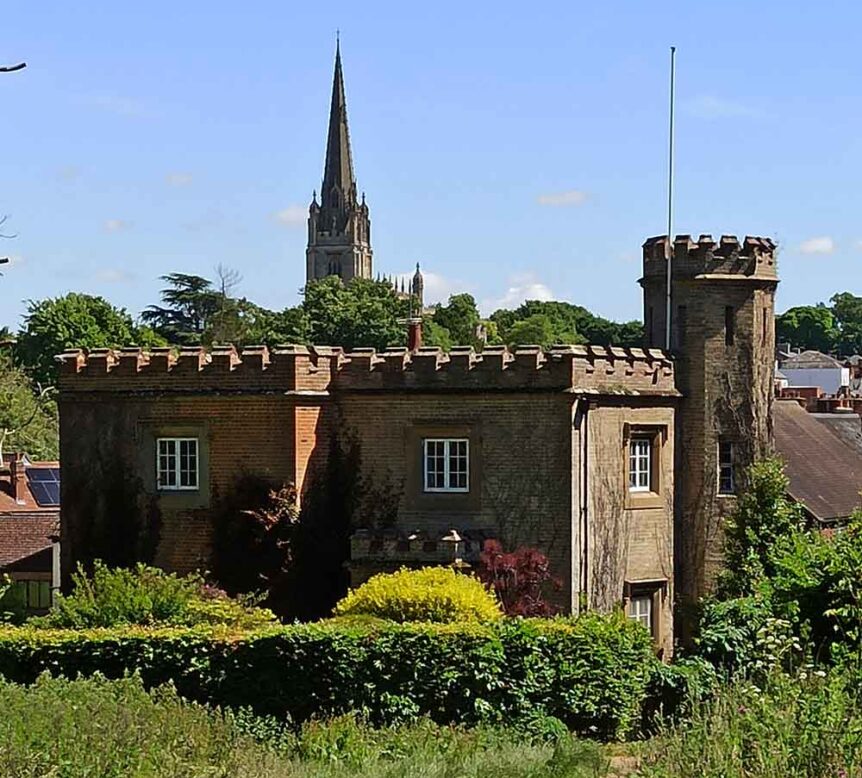
© Martyn Everett
Originally printed in Saffron Walden Historical Journal No 17 Spring 2009
© Saffron Walden Town Library.
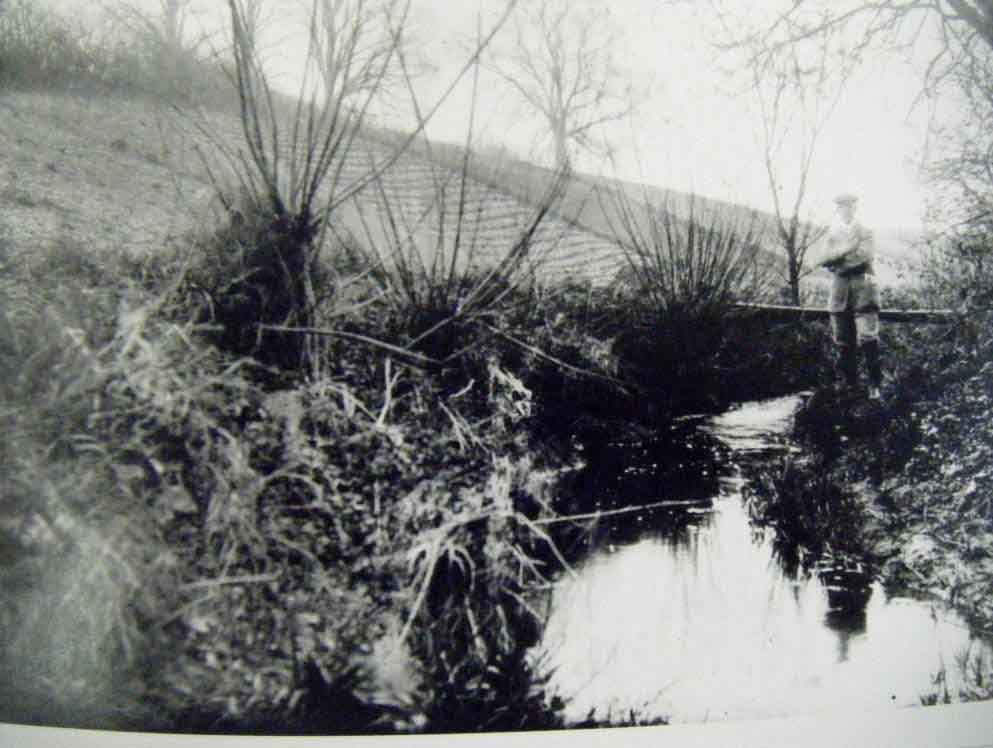
The few dog-eared carbon copies that provided my introduction to the Saffron Walden Survey failed to reveal the unusual story behind its compilation. It was only a fading photograph of strip fields near the headwaters of the River Bourne at Ashdon that made me give it a second glance.
In fact, as I later discovered, the Survey is a remarkable document, with an interesting story attached. It was one of the first ‘Regional Surveys’ undertaken in Britain – an attempt to study Saffron Walden in ‘relation to its environment and from as many outlooks as possible’, and was displayed in several countries. Work on the Survey brought together a group of about 120 people, sparking new ideas about education, while its findings eventually improved living conditions for many of the poorest people in Saffron Walden, and reshaped the town’s urban landscape.
The Saffron Walden Survey was inspired by the ideas of the geographer and sociologist Patrick Geddes, and modelled on his pioneering Civic Survey of Edinburgh.1 Geddes was a flamboyant personality, who is best remembered for the establishment of Edinburgh’s ‘Outlook Tower’, in which a camera obscura projected an image of the city onto an enormous table to facilitate study of the urban environment. Geddes was heavily influenced by the ideas of the French anarchist geographer Elisee Reclus,2 who established the subject of economic geography, a subject close to what we would now consider part of environmental studies – how people are shaped by their environment and how their activities in turn shape the environment. Geddes pioneered the modern idea of town planning in Britain, and in particular the need to ‘survey before planning’.3
Geddes had a god-daughter who grew up to become both his assistant and his disciple. Mabel Barker was born in Cumbria in 1885, the daughter of Geddes’ school-friend Henry Barker. According to her biographer Jan Levi, Mabel disliked the enforced learning of compulsory education, but thrived when, at the age of 14 she went to the High School in Truro. Truro High School offered comparative freedom, and practical methods of learning, and left Mabel convinced that ‘it is outside the school system that we have found in the last fifty years, the most lively educational methods; and the formation of the greatest and most interesting personalities, has for the most part, taken place outside it’.4
In 1904 Mabel went to Cheltenham Ladies’ College, where she trained to be a teacher, and in 1907 she obtained her B.Sc. from London University where she studied geology. A few months teaching botany in Limerick and a full-time teaching position in Glamorgan were followed in 1909, by acceptance of the post of ‘Science Mistress’ at the Saffron Walden Teacher Training College. Mabel’s arrival made a profound impact. Her enthusiasm for drama, literature, history, country dancing and all kinds of outdoor activity, but especially nature studies, was rapidly communicated to her students. The following year, Mabel and another teacher, Miss Fraser set up an Historical and Geographical Research Society to study the history and geography of the Walden district. Sixty students joined and the work was divided between ten study groups. By November 1910, the Society was able to report:
Fortnightly meetings were held in the day room, when the leader of each group was expected to produce a report of the work done during the preceding fourteen days. Any points of interest were discussed; and several papers were read on different branches of the work – the roads of Walden, the contour and flora of the district, the Roman camps, historic buildings and surrounding villages. Maps and plans are made wherever possible, and one group is responsible for brass-rubbings. So in time we ought to be able to produce a clear and complete picture of Walden as it is today, with some suggestion of what it was in by-gone times.5
At some time in 1910, Geddes wrote to Mabel Barker and asked her to undertake a full Regional Survey of Saffron Walden. Mabel agreed and soon found a willing companion in the form of George Morris, an assistant master at the local Friends’ School. George Morris, B.Sc., had been educated at Ludlow, and first worked for a chemist, but soon found himself teaching at a small boarding school run on unconventional lines at Heacham in Norfolk, before coming to the Friends’ School in Saffron Walden in 1907. According to the Headmaster, C.B. Rowntree, Morris’s outlook and previous experience at Heacham ‘enabled him to take an active share in working out the developments that led in 1910 to the adoption of co-education in a more thorough form than previously’. He was Science and Geography Master at the Friends’ School for 23 years, and soon after his arrival he introduced Nature Study and Botany into the curriculum, making it the basis of Science teaching at the school. His enthusiasm built up the Natural History Society, and from 1907 onwards he organised school tramps taking up to 30 children on walking holidays each year. During his years in Saffron Walden, he was for a time the Honorary Curator of the Museum and a Trustee of the Literary and Scientific Institute, where he was also chairman of the Books’ Committee. Morris was also a member of the editorial committee for the school magazine, The Avenue, to which he was a regular contributor notably of a series of articles. ‘Round Walden – natural history and archaeological notes’, published between 1910 and 1920.6
Mabel and George soon recruited Guy Maynard. Guy was the son of Nathan Maynard of Whittlesford, who was caretaker and curator of the Saffron Walden Museum from 1880 until 1904 when Guy succeeded him. Together these three people brought energy and focus to the task of compiling the Regional Survey. Much of the practical work was undertaken by students from the Training College during 1911, and was based on the preparatory work undertaken in 1910 by the College’s Historical and Geographical Research Society.
The method used was that of the ‘graphic survey’ with the results displayed as an exhibition, augmented by the use of relief models in plaster. One such model constructed at the Friends’ School, for use in the school, portrayed the district round Saffron Walden on a linear scale of six inches to one mile, but with the vertical scale considerably exaggerated. A second model depicting an area of about 20 square miles round Walden was made in the Training College in 1911. Made to the same linear scale, it had a true vertical scale, and utilised plasticine to represent the drift geology.
Careful use was made of photography to record important geological features, such as the source of the Granta, and the ravine cut by the Slade where it runs parallel to the Little Walden Road. Surviving historical features in the landscape were also photographed, such as the ridges left by centuries of ploughing on the fields which now form part of Rowntree Way. People taking part in the Survey are often included in the photographs, used as markers to indicate, for example, the distance between the ridges or the depth of the Ravine.
Much of the material gathered together for the Survey was turned into an exhibition, which Geddes used to promote his ideas at an International Exhibition in Ghent in 1910, and subsequently at Town Planning Exhibitions held in London, Edinburgh, Belfast, and Dublin. Supplemented by additional diagrams and charts, the Survey results were placed on display in the Saffron Walden Town Hall on 31 October 1911, on the same day that Patrick Geddes came to the town to give a lecture on ‘Regional Survey before Town Planning’.7
In February 1912 the organisation set up to carry out the Survey was turned into a formal Society, with practical working groups established around 12 subjects: meteorological; geological survey; botanical survey; local geology; industries; anthropology; archaeology and topography; town records; church history; history of religious denominations; reminiscences of Walden; photographic and pictorial section; preservation of local antiquities.
Mabel turned the findings of the Survey into a 35,000-word, hand-written thesis, which still survives in the Museum archives, with its original photographs, including one of local boy Scouts tending the Scouts’ allotment on Debden Road. Mabel’s thesis was subsequently turned into a typescript edited by George Morris. A copy of this typescript without the photographs survives in the Town Council archives, and parts of a slightly different version with some different photographs found its way into the Literary & Scientific Institute in the 1950s, and can now be consulted in the old Town Library. The Town Council copy, dated 1913, was used as a proof copy and retains not only the corrections but occasional comments, including one hand-written annotation: ‘I haven’t time to correct all this in detail. A lot of it seems to me desperately dull and stodgy.’ Indeed there are sections of the Survey which are ‘stodgy’, but there are also some fascinating cameo descriptions of parts of the town that no longer exist, such as Camps Yard in Castle Street:
Here there are no back ways or separate yards to the houses, very little direct sunlight or fresh air, sanitary arrangements are very badly planned… The rabbit (fur pulling) factory should be expelled from the court as the fluff is blown into the other houses.
Some of the phraseology occasionally manages to combine a slightly condescending attitude with valid criticism – one sentence reads:
There are still places of horror to all except those who, accustomed to regard the lowest labourers as a more or less brutalised class, accept their dwellings, no matter how dreadful and insanitary, as part of the inevitable order of things. The degrading effect of these surroundings upon body and mind of the inhabitants cannot be questioned.
Eventually, from 1912 onwards edited sections of the Survey were published in The Friends’ School Magazine, The Avenue. These include lengthy sections on the history and archaeology of the area written by Guy Maynard.
It was at this point that Mabel Barker left Saffron Walden to study geography at Oxford University – although she continued to support the work of the society by basing her studies around the geography of the Saffron Walden area.8 But the work of the Society was in some ways coming to a natural conclusion, with publication of the Survey in The Avenue, and the loss of a key active member. In 1914 the Society produced a leaflet which showed that it had effectively transformed itself into an early amenity group. The Society, which had 55 members, had been responsible for tree-planting in Castle Street, an attempt to revive folk-dancing, a programme of lectures at the Literary & Scientific Institute, the establishment of a children’s ‘Play Centre’ and a ‘street gardening movement’ organised by Miss Youngman. This latter was an attempt to encourage window boxes full of carnations throughout the town. Engelmann’s Nurseries donated a free potted carnation to everyone who promised to exhibit it later in the year.
The First World War sealed the fate of the Survey Society, its end dramatically symbolised when the Steamship Clan Grant which was carrying the Saffron Walden exhibition to India, was captured and sunk by the German Battle Cruiser Emden, 150 miles southwest of Cochin in October 1914.9
Saffron Walden Museum still retains four boxes of ephemera and notes gathered together for the Survey. These include rainfall data for the village of Littlebury, tabulations of statistics on births, marriages and deaths in Saffron Walden, a prospectus for the Tower House School at Seward’s End, and a ‘Return of the number of persons proceeded against in the Borough of Saffron Walden during the past 25 years 1887 to 1911 inclusive’, duly stamped and signed by the Essex Constabulary, and a much earlier notebook containing John Player’s cramped hand-written record of crimes 1838-1840. There is also a Catalogue of Engelmann’s carnation varieties for 1913, Mabel Barker’s hand-written thesis in brown card covers, and a survey typescript.
Guy Maynard remained curator at Saffron Walden Museum until 1920, when he became curator at Ipswich Museum. He was an active and innovative curator, and took part in the controversial first archaeological excavation at Sutton Hoo. In 1935 it was reported that he and George Morris were proposing to carry out a Regional Survey of Ipswich, but it does not seem to have gone beyond the planning stage.
Mabel Barker went to work at King’s Langley Priory, a progressive school, in 1917, during which time she lectured widely and published articles and leaflets on Regional Survey and its use as an educational method. With George Morris she founded the Regional Survey Society, continued to support Geddes’ work, and in September 1925 she went to the College des Ecossais, at Montpellier, in southern France. The College had been established by Geddes as the first of a proposed global network of study centres in University towns.10 Mabel spent ten months there writing a thesis on ‘The Use of the Geographical Environment in Education’. In the 1920s she became active in the Kibbo Kift movement, and in 1927 she set up her own school, Friar Row, in Caldbeck. Significantly the architect for the school building was F.C. Mears, who had provided the illustrations for Geddes’ original Survey of Edinburgh. Mabel also developed a passion for rock-climbing and climbed with some of the best climbers of her time, including Millican Dalton.
George Morris continued to teach at the Friends’ School, although his employment was interrupted by conscription. With Mabel Barker, he became an active member in the national Regional Survey Society, and was its Honorary Secretary for several years until the Society was absorbed into the Sociological Society, again with Morris as Secretary. In 1930 he and his wife left the Friends’ School, travelling to Montpellier to assist Mabel and Patrick Geddes in their work at the College des Ecossais.
Looking back nearly 100 years we might ask what the Saffron Walden Survey achieved. Among the recommendations made at the end of the Survey were proposals to demolish Camps Yard, and Chapel Court in Castle Street, a reduction to the number of dwellings in Upper Square to ease over-crowding, demolition of an area of slum tenements known as the ‘Rookery’ at the bottom of Debden Road and the widening of the road near the junction with London Road; and the siting of new houses in the Sheds Lane area, all of which happened after the First World War. One proposal which did not come to fruition was the ‘acquisition of a whole farm by the Corporation’ for the establishment of a colony of workers’ houses, with gardens, space for drying linen, ‘separate sanitary offices’ and adjoining allotments or small-holdings. In fact we can see that the Survey, as Geddes intended, provided the basis for planning the development of the town in the inter-war period. Subsequently the idea of survey before planning was adopted nationally and incorporated into the formal planning process of local government. Through the work carried out in compiling the Survey we can also glimpse how the ideas that Geddes and Mabel Barker advocated of studying the whole local environment as a communal activity can develop practical skills and involvement in the local community.
NOTES
- Geddes, P., The Civic Survey of Edinburgh, with illustrations by F.C. Mears (Architect).Reprinted from the Town Planning Conference [1910] for the Civics Department, Outlook Tower Edinburgh and Crosby Hall, Chelsea (1911).
- Elisee Reclus was the author of a massive six-volume encyclopaedia: L’homme et la Terre. Paris: Librairie Universelle, 1905-1908.
- A good introduction to Geddes’ life is provided by Paddy Kitchen, A Most Unsettling Person: an Introduction to the Ideas and Life of Patrick Geddes (1975).
Quoted in Levi, J., And Nobody Woke Up Dead: the Life and Times of Mabel Barker –Climber and Educational Pioneer (2006), p.24- Saffron Walden Training College Magazine, 23 (April 1910), p.22 & Saffron Walden Training College Magazine, 24 (November 1910), p.15.
- Rowntree, C.B., “George Morris” The Avenue, (1930), pp 34-6.
- Saffron Walden Weekly News (3 November 1911).
- Saffron Walden Training College Magazine, 28 (November 1912), p.22.
- New York Times (22 October 1914) & (13 November 1914).
- Schimmerling, A., ‘The Last Activity of Patrick Geddes’ Life: The Scots College, Montpellier’ in Ferreira, J.V., & J.H.A., S.S. (Eds.): The Outlook Tower: Essays on Urbanization in Memory of Patrick Geddes (1976), pp 51-3