
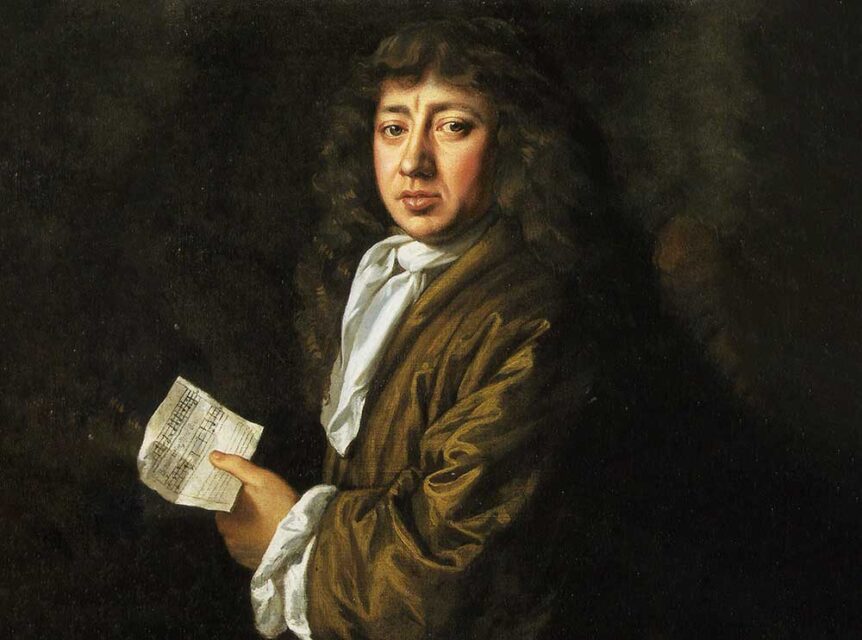
The above featured image is the portrait by John Hayls, 1666
© Jeremy Collingwood
First published in Saffron Walden Historical Journal, No. 27, Spring 2014
Samuel Pepys began his diary at the age of 27 years on 1st January 1660. It provides a special insight into the period of the Restoration and the reign of Charles II. Through the patronage of Edward Montagu, who became Earl of Sandwich, Pepys worked his way from a clerkship to being Chief Secretary to the Admiralty. The diary provides a daily domestic record of Pepys’ life and loves over the space of ten years, as well as recounting at first hand national events, such as the Great Plague, the Second Dutch War and the Great Fire of London. The diary ceased in 1669 because of Pepys’ failing eyesight.
Pepys was born in London where he spent most of his days. But he had connections with East Anglia. He spent some of his schooldays at Huntingdon Grammar School before going on to St Paul’s School in London. In 1650 he went up to Cambridge University and was admitted as a sizar at Magdalene College in March 1651, graduating in 1654.Pepys was a lifelong bibliophile and by his will ensured that his large private book collection of some 3,000 volumes eventually passed into the hands of his alma mater, Magdalene College, where it is housed in the Pepys Building. Magdalene originally founded as a Benedictine hostel in 1428 was refounded by Thomas Audley, the Lord Chancellor, in 1542. It was through the Audley connection that the hereditary visitorship of the College became Lord Braybrooke of Audley End.
The diary was written in a form of shorthand known as Tachygraphy. The first major attempt to transcribe the text was made by the Reverend John Smith, later Rector of St Mary the Virgin in Baldock, over the years 1819-1822. This was at the instigation of the Master of the College, the Revd. and Hon. George Neville. The transcriptions were then passed on to Richard Neville (1783-1858), who became the third Baron Braybrooke in 1825. Neville set about producing the first edition of the diaries in 1823. According to Clare Tomlin (in Samuel Pepys: The Unequalled Self, 2003, p. 383): ‘Braybrooke bowlderised, cut the manuscript by three quarters and rewrote substantial amounts in his own words, producing what its modern editor, Robert Latham, has called a travesty of the original.’ Early editors like Lord Braybrooke excised large parts of the text dealing with Pepys’ sexual adventures. The complete, unexpurgated and definitive edition edited and transcribed by Robert Latham and William Matthews was published by Bell & Hyman, London, and the University of Californian Press, Berkeley, in nine volumes over the years 1970 to 1983.
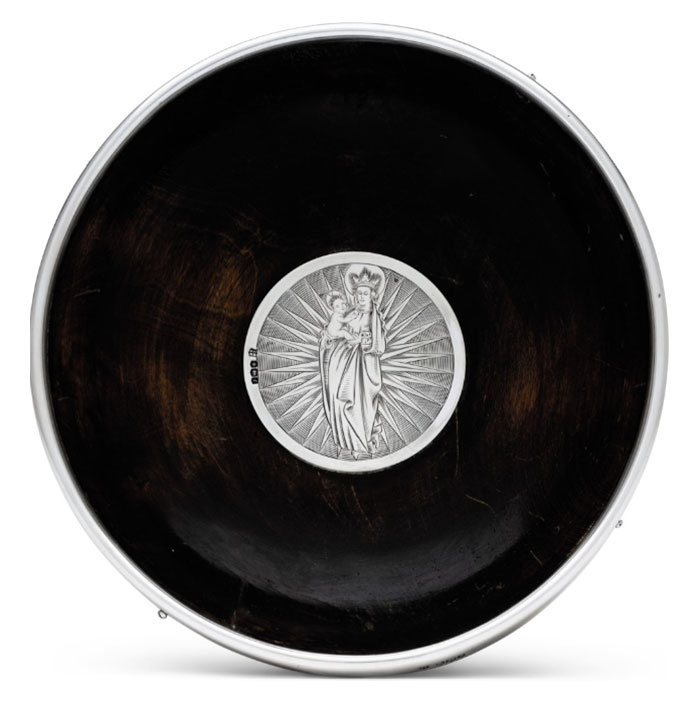
The excerpt from the diary which follows mentions Pepys visit in January 1660 to Saffron Walden, in which he managed a tour of Audley End and the Edward VI almshouses. At Audley End Pepys somewhat seditiously drank the health of Charles II who was not to return from exile for another four months. At the almshouses in Abbey Lane he enjoyed another drink from a wooden and silver bowl ever afterwards treasured as that used by the famous diarist.
Diary
‘27th. Up by four o’clock, and after I was ready, took my leave of my father, whom I left in bed, and the same of my brother John, to whom I gave 10s. Mr Blayton and I took horse and straight to Saffron Walden, where at the White Hart, we set up our horses, and took the master of the house to show us Audley End House, who took us on foot through the park, and so to the house, where the housekeeper shewed us all the house, in which the stateliness, chimney-pieces. and form of the whole was exceedingly worth seeing. He took us into the cellar, where we drank most admirable drink, a health to the King. Here I played on my flageolette, there being an excellent echo. He showed us excellent pictures; two especially, those of the Four Evangelists and Henry VIII. After that I gave the man 2s. for his trouble, and went back again. ‘In our going, my landlord carried us through a very old hospital or almshouse, where forty poor people were maintained; a very old foundation; and over the chimney in the mantelpiece was an inscription in brass: “Orate pre anima Thomae Bird,”&c.: and the poor box also was on the same chimneypiece, with an iron door and locks to it, into which I put 6d. They brought me a draft of their drink in a brown bowl, tipt with silver, which I drank off, and at the bottom was a picture of the Virgin and the child in her arms, done in silver. ‘So we went to our Inn, and after eating of
something, and kissed the daughter of the house, she being very pretty, we took leave, and so that night, the road pretty good, but
the weather rainy to Ep[p]ing, where we sat and played a game at cards, and after supper, and some merry talk with a plain bold maid of the house, we went to bed.
Note:
Jeremy Collingwood passed away in December 2020. Click here for his obituary.