
© Michael Holland
Reprinted from: Saffron Walden Historical Journal No 1 Spring 2001
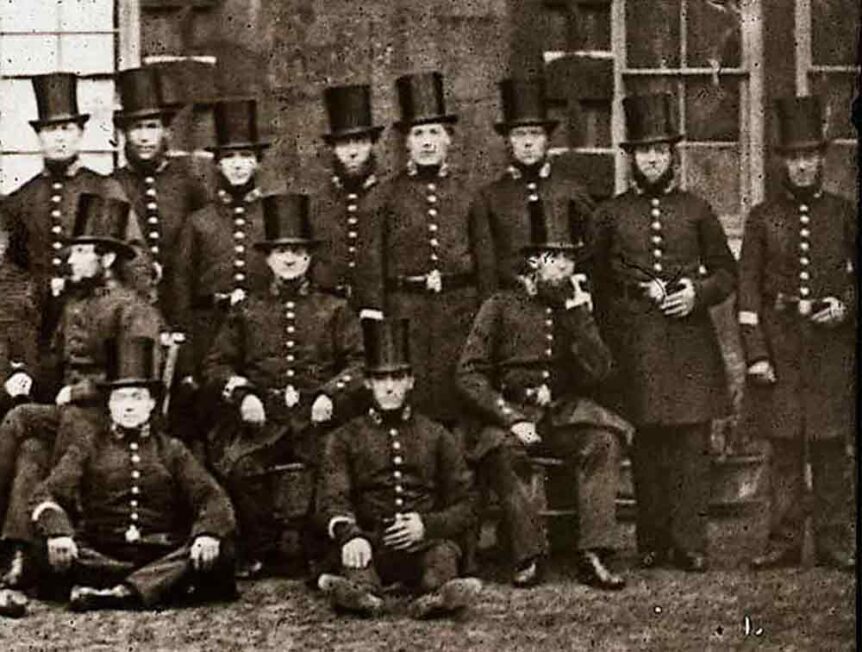
Before the advent of the modern day police service, the Parish Constable maintained law and order at parish level. He would be elected from the parishioners on a yearly basis on Easter Monday of each year. He was unpaid, although he was permitted by law to levy a modest rate of a penny or twopence in the pound to cover his expenses. He was required to keep a record of both the rate levied and his disbursements. In the vast majority of cases, the Parish Constable’s full time occupation was either publican or blacksmith, and therefore he was used to heavy work, likely to be of a muscular build, and able to cope with most prisoners. In the parish of Halstead, records show that a hairdresser served as constable during the 1830s, but this was exceptional.1 The main drawback with having a policing system based on the parish constable was that he rarely enforced the law on his own initiative, but worked under the auspices of the local Justice of the Peace who would issue warrants for arrests, searches etc. A secondary problem was that the parish constable was not empowered to work outside the Hundred in which he resided, which could be important where felons operated across borders of Hundreds and indeed counties.
Until the later part of the 19th century the victims of crime were expected to finance the prosecutions of those who had offended against them. This would include the witness expenses; the cost of the barrister, even the clerk who transcribed the depositions would levy a charge. Many victims, therefore, avoided official means to deal with offenders. There was, however, a means by which the cost of bringing a prosecution could be offset, the prosecution association.
This, the forerunner of Neighbourhood Watch has its roots in the 1690s and coincided with the advent of the provincial newspaper. The first recorded group was formed in Stoke-on-Trent in 1693.2 The scheme worked as follows: Members of the scheme would pay an annual subscription to the association. If a member became a victim of crime, advertisements would be placed in the local newspapers offering a reward for information leading to the conviction of the felons responsible for the crime. Alternatively notices would be posted detailing the crime and reward. If the offender were apprehended, the association would also fund the cost of prosecuting him. In short, it was a form of insurance. The first Essex association was formed in 1765, at Colchester.3 Others followed although some targeted specific offences. The Billericay Association was concerned with horse theft (a capital offence then), the town being situated on a coaching route and therefore susceptible to such crime. In Halstead in 1800, following a spate of farm fires, an association was formed to specifically address the offence of arson.
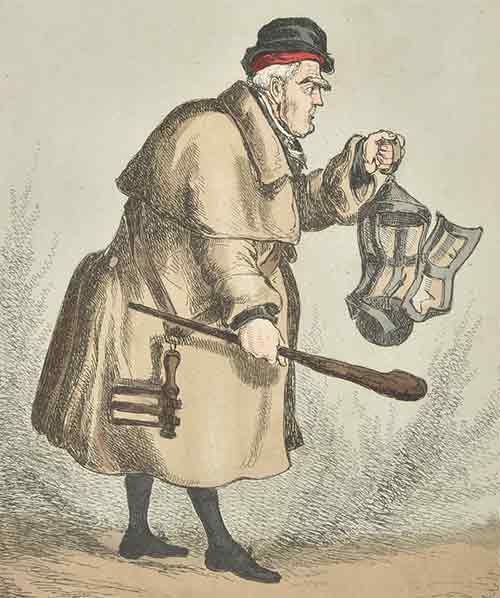
Not only did they fund advertising and any prosecutions, but also paid armed watchmen to guard vulnerable premises. As the situation escalated they provided the funds for a ‘Bow Street Runner’ to be hired to investigate the offences, and for a reward of 100 Guineas to be offered.4 At Braintree, a particularly distressed town at the start of the 19th century due to the rapid decline of the cloth industry, an association was established to prosecute persons hoarding grain with a view to making excess profits as food prices increased.5 The extent of Prosecution Associations across the county is shown below in the appendix.
The main concentrations of associations were in the north-west and north-east of the county. There was a limited concentration on the Dengie Peninsular and along the Thames shore in the Rochford Hundred. The Tendring and Dengie Hundreds suffered from a dearth of resident magistrates, a factor that might explain the concentration of associations in these areas. The establishment of associations in central and northern Essex appears fragmented. This is particularly strange in the Hinckford Hundred where, between 1783 and 1851, most protest, and logically property, crimes were committed.6 The area in the Clavering Hundred was renown for protest activity, a fact that is reflected by the concentration of associations in that vicinity.7
There was another factor and this was the operation of gangs of felons operating on the borders of Essex with Hertfordshire and Cambridgeshire. By operating in gangs they were able to terrorise their victims, by force of numbers. One such gang, known as the Waltham Gang, plagued the western part of Essex, committing robberies on householders.8 Apparently Clavering miller, Tom Nottage was amongst their victims.9 Such activities would be guaranteed to act as a strong incentive to take all possible action in the defence of property, hence the concentration of associations in this neighbourhood.
In April 1840 Essex Constabulary was formed, and one could be forgiven for thinking that this spelt the end of the Prosecution Associations. The opposite was true. Firstly, the new force did not cover the entire county and there was still a need for some incentive for the ordinary man in the street to assist in the fight against crime. Secondly, and this is probably the more important issue, the constabularies were not permitted to offer rewards for the apprehension of offenders. The prosecution associations could therefore operate in conjunction with the police. Certainly in 1844 during a widespread spate of arsons in Suffolk, the prosecution associations were specifically requested by the chief constable to offer substantial rewards (in the region of £1,000) for information leading to the prosecution of the arsonists. When it is considered that the average farm labourer earned no more than nine shillings per week, this was a great incentive to inform on arsonists.10
Just how effective were the Prosecution Associations in combating crime? To a great extent this is virtually unanswerable, as we do not really know the true extent of crime in Essex (or for that matter the rest of England) during this period. It has been estimated that up to 90% of crime went nreported.11Accordingly, it is impossible to estimate the effect that the associations had on crime. Furthermore, despite the fact that the Essex newspapers carried weekly advertisements appertaining rewards offered by the associations, the readership of such newspapers was more likely to be the victims of crime rather than those who could inform on criminals, namely their peers. Even if they were made aware of rewards offered, it is questionable how many farm labourers would be inclined to inform on criminals for a relatively small sum of money. Small, when the typical sanctions against even petty criminals included hanging and transportation. Likewise, there was a marked reticence amongst juries to convict some classes of felons until after 1837 when some offences were de-capitalised.12 This is not to say that labourer did not inform on labourer. In the case of one Essex incendiary of 1830, the reward of £1,000, 30 to 40 years wages for a labourer, might have been sufficient to send an innocent man to the gallows.13
The demise of the prosecution association was brought about by improved rights for the victims of crime, together with an efficient and reliable policing service, which brought with it a greater element of detection. The associations, however, did fulfil an important role, not so much in detection, but in prosecution. The modern day equivalent of the associations, Neighbourhood Watch, fulfils the opposite role.
APPENDIX: LIST OF PROSECUTION ASSOCIATIONS IN ESSEX
| Name | Object | Year Est. |
| Ardleigh | Prosecution Association | 1769 |
| Barstable & Chafford | Barstable & Chafford Association against robbers | 1779 |
| Barstable & Chafford | Barstable & Chafford Game Association | 1779 |
| Billericay | Billericay Association against Horse Stealers | 1799 |
| Billericay | Great Burstead and Billericay Association for the Prosecution of Felons | 1804 |
| Blackmore | Blackmore Assn for the Prosecution of Thieves, Felons & co | 1798 |
| Blackwater | Blackwater Association Against Felonies | 1793 |
| Bocking & Braintree | Bocking and Braintree Association against Felonies | 1801 |
| Boreham | Boreham Parish Association | 1800 |
| Braintree | Braintree Association for the Prosecution of Forestallers, Ingrossers, and Regrators | 1800 |
| Brentwood | Brentwood and South Weald Association | 1801 |
| Bures | Bures Association for the Prosecution of Felons | 1795 |
| Chelmsford | Chelmsford Association for Apprehending & Prosecuting Animal Maimers & Thieves | 1797 |
| Chelmsford | Chelmsford Association for the Prosecution of Felons | 1797 |
| Chelmsford | Chelmsford Hundred Game Association | 1809 |
| Colchester | Colchester Association for the Protection of Property & the Prosecution of Housebreakers & thieves | 1765 |
| Colchester | Colchester Association against Horse Stealers | 1773 |
| Colchester | Colchester Association | 1800 |
| Colchester | Colchester Game Association | 1800 |
| Dagenham | Dagenham Association for the Prosecution of Felons | 1795 |
| Dengie Hundred | Dengie Association for the Prosecution of Felons | 1801 |
| Dunmow | Dunmow Prosecution Association | 1788 |
| East & West Mersea | East & West Mersea Association for Apprehending and Prosecuting Felons | n.d. |
| Epping | Association for the Security of Lives & Properties of the Inhabitants of the Epping Division | 1818 |
| Essex | Essex Association for the Preservation of Game | 1779 |
| Essex | West Essex Association for the Preservation of Game | 1787 |
| Essex | East Essex Association for the Prosecution of Felons | 1789 |
| Essex | East Essex Prosecution Association | 1801 |
| Fordham | Fordham Association | 1811 |
| Frating | Frating Association for the Prosecution of Felons | 1802 |
| Fyfield | Fyfield Association for the Prosecution of Felons | 1803 |
| Great Baddow | Great Baddow & adjoining Parishes Association for the Prevention of Crime and the Prosecution of Felons | 1837 |
| Great Oakley | Great Oakley Association for the Prosecution of Felons | 1798 |
| Great Tey | Great and Little Tey Prosecution Association | 1787 |
| Great Wakering | Great Wakering Prosecution Association | 1787 |
| Hadstock | Linton, Hildersham, Bratlow and Hadstock Association (Cambridgeshire) | 1818 |
| Halstead | Halstead Assn for the more speedy detection of highwaymen, house-breakers, sheep stealers etc | 1786 |
| Havering | Havering Liberty & Chafford Hundred Association for the Protection of Game | 1801 |
| Horndon | Horndon-on-the-Hill Prosecution Association against Robbers, Horsestealers & Housebreakers | 1787 |
| Kelvedon | Kelvedon Association for the Prosecution of Felons | 1786 |
| Little Clacton | Little Clacton Association for the Prosecution of Felons | 1802 |
| Little Thurrock | Little Thurrock & District Association for the Prosecution of Felons | 1803 |
| Little Waltham | Little Waltham, Great Waltham & Broomfield Association for the Prosecution of Felons | 1801 |
| Little Waltham | Little Waltham Game Association | 1807 |
| Maldon | Maldon Association for the prosecution of Felons | 1795 |
| Marks Tey | Marks Tey Association | 1821 |
| Mucking | Mucking, Fobbing, Waltons with Satford-le-Hope Game Association | 1800 |
| Ongar | Ongar Association Against Murderers, Housebreakers, Horse & Sheepstealers & Felons of every description | 1787 |
| Ongar | Ongar, Harlow and Half Hundred of Waltham Prosecution Assn | 1788 |
| Radwinter | Radwinter Prosecution Association | 1831 |
| Rainham | Rainham Prosecution Association | 1788 |
| Rayleigh | Rayleigh Association for the Prosecution of Felons | 1794 |
| Rochford | Rochford Hundred Assn for the Prosecution of Felons & Thieves | 1797 |
| Rochford | Rochford Game Association | 1807 |
| Romford | Gidea Hall, Romford & the Liberty of Havering Game Preservation Association | 1800 |
| Saffron Walden | Saffron Walden Prosecution Association | 1809 |
| South Weald | South Weald & Brentwood Assn for the Prosecution of Felons | 1800 |
| Southminster | Southminster Association for the Prosecution of Felons | 1809 |
| Stock | Stock and Buttsbury Association | 1799 |
| Tendring | Tendring Hundred Association for the Prosecution of Felons | 1800 |
| Thaxted | Thaxted Association | 1809 |
| Thorpe-le-Soken | Thorpe, Kirby and Adjacent Parishes Association | 1798 |
| Thorpe-le-Soken | Sokens Association for the Prosecution of Felons | 1803 |
| Tollesbury | Tollesbury & Tolleshunt D’Arcy Game Association | 1815 |
| Thundersley | Thundersley Parishioners Association | 1800 |
| Uttlesford | Uttlesford and Clavering Prosecution Association | 1840 |
| Waltham | Waltham Half Hundred Association for the Prosecution of Felons | n.d |
| Weeley | Weeley Prosecution Association | 1787 |
| West Bergholt | West Bergholt Association for the Prosecution of Felons | 1799 |
| West Ham | West Ham Prosecution Society | 1817 |
| Wethersfield | Wethersfield Prosecution Association | 1774 |
| Winstree | Winstree Hundred Association for the Prosecution of Felons | 1786 |
| Witham | Witham Prosecution Association | 1777 |
| Writtle | Writtle Prosecution Association | 1786 |
Note: The Appendix above has been expanded from the one published in the original article.
NOTES
1. ERO, Vestry Minutes, D/P 96/8/6.
2. Philips, D., ‘Good Men to Associate and Bad Men to Conspire: associations for the prosecution of felons in England, 1760 to 1860,’ in Hay, D. & Snyder, F. (Eds.) Policing and Prosecution in Britain, 1750 to 1850 (1989), p.161.
3. King, P.J., ‘Prosecution Associations and their Impact in 18th Century Essex,’ Hay & Snyder (1989), p.176.
4. Chelmsford Chronicle, 24 October 1800.
5. Chelmsford Chronicle, 8 August 1800.
6. Holland, M.A., Flames Across Essex: the incidence of protest crime in Essex (Forthcoming),
7. Hobsbawm, E.J. & G. Rudé, G. Captain Swing (1985), p.150.
8. Chelmsford Chronicle, 19 March 1819. Robbery, in this context, relates to burglariously entering premises and intimidating their victims.
9. Correspondence with K. Harrison July 1999 to April 2000 on this and other gangs operating within Essex.
10. Jones, D.J.V., ‘Thomas Campbell Foster and the Rural Labourer: incendiarism in East Anglia’, Social History 1 (1) 1976, p.18.
11. King, P.J., Crime, Justice and Discretion; law and social relations in England, 1740 to 1820 (Forthcoming) p. 225.
12. Cooper, J., unpublished research notes for J Cooper, A Well-Ordered Town: a story of Saffron Walden, Essex, 1792-1862 (2000) pp. 5-6.
13. Holland, M.A., ‘A Crime to be Poor: protest in the Barstable and Rochford Hundreds, 1825 to 1840,’ unpublished MA thesis, University of Brighton (1992) p.52.