
© Lesley & Michael Furlong
Reprinted {with updates} from Saffron Walden Historical Journal No. 40 Autumn 2020
The case of Margaret Rickett (or Ricketts) heard at the Saffron Walden County Bench in 1893 is both shocking and distressing but in the light of her background and upbringing it is perhaps unsurprising. We stumbled across her story whilst researching our own family history.
In an unusual extract from the Saffron Walden Reporter dated December 2019 we saw an article in bold headlined: ‘Cases of child neglect and mistreatment show five-fold increase across county’. Figures released by the National Society for the Prevention of Cruelty to Children (NSPCC) show a sharp rise in cases of parents or carers deliberately neglecting, assaulting, abandoning their children, or exposing them to serious harm and unnecessary suffering. 1
Due to Covid restrictions we set our findings to one side, but then earlier this year the question of child abuse & exploitation was brought to the fore as in January 2021 the number of reported incidents of children dying or being seriously harmed after suspected abuse or neglect rose by a quarter following England’s first lockdown last year. The Child Safeguarding Practice Review Panel received 285 serious incident notifications from April to September. This is an increase of 27% from the same period the previous year and that was reinforced by a separate report from the NSPCC, “The impact of COVID-19 on child abuse in the UK”. This is, however, far from a new situation as the story of Margaret Rickett illustrates. Founded in 1884 as the London SPCC by the Reverend Benjamin Waugh, the NSPCC is the only UK children’s charity with statutory powers that enable it to take action to safeguard children at risk of abuse.
BE it enacted by the Queen’s most Excellent Majesty, by and with the advice and consent of the Lords Spiritual and Temporal, and Commons, in this present Parliament assembled, and by the authority of the same, as follows… 2
Thus it was that The Prevention of Cruelty to, and Protection of, Children Act 1889, commonly known as the Children’s Charter, an Act of the Parliament of the United Kingdom of Great Britain and Ireland (as it then was), was born after several false starts and a lengthy gestation period, including five years of campaigning by the London SPCC who, on its becoming law, changed its name to the NSPCC, because by then it had branches across Great Britain and Ireland. Rev. Waugh became its founding director & Queen Victoria its first patron, and in its initial five years it helped almost 4000 children who, until that time had less protection in law than an animal. It was the first Act of Parliament for the prevention of cruelty to children. It enabled the state to intervene, as never before, in relations between parents and children. Police could arrest anyone found ill-treating a child, and enter a home if a child was thought to be in danger. The Act included guidelines on the employment of children and outlawed begging:
Restrictions on employment of children. Any person who — (a) causes or procures any child, being a boy under the age of fourteen years, or being a girl under the age of sixteen years, to be in any street for the purpose of begging or receiving alms, or of inducing the giving of alms, whether under the pretence of singing, playing, performing, offering anything for sale, or otherwise.
Margaret Rickett
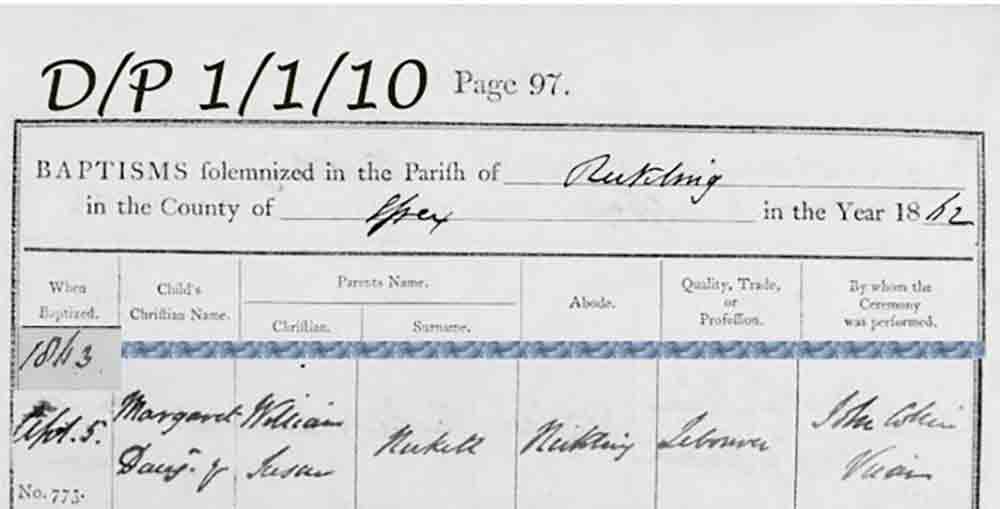
Margaret Rickett had a shaky start in life and her early years were difficult to track; she was baptised at All Saints, Rickling Church on 5 April 1863 (Fig. 1).3 However, we were unable to locate her birth record at the General Register Office, perhaps not unexpectedly, as her father William was an illiterate agricultural labourer and her mother Susan was also unable to read or write.
William had been born about 1812 in Quendon and baptised as Ricket on 8 December 1816, the son of James and Mary.4 He died in 1878 aged 66 years and was buried in Rickling on 24 February.5 Mother Susan (nee Law) is not in the baptismal register for Rickling.6 We did find however a Mary Law who had five children out of wedlock, so perhaps did not get round to registering Susan’s birth. Her birth could have been anywhere between 1814 and 1822, since her burial in Rickling Church on 17 April 1895 records that she was aged 81 years, and had been in the Saffron Walden Union Workhouse (a place that Margaret also got to know well!).7 [2026 update. Workhouse records show Susan Rickett died on 13 April 1895 and her age was listed as 80 years! In 1842 William & Susan are living in the workhouse where another of their daughters, Mary Ann was born ]
So with a base-born mother and an uneducated father, Margaret’s background did not give her the best start in life.
Following her baptism, Margaret’s history begins with the first official entry for her in the 1871 census where we find her recorded as Margarett (note spelling) aged eight years in High Road, Rickling with her family. Her father was listed as an ‘AgLab’ and ‘Margarett’ as a scholar, although clearly we can ascertain from later events that she did not learn much from school.8
In the 1881 census Margaret was living with her sister Hannah Massey (born Quendon, baptised 3 May 1857), brother-in-law and her mother Susan (a widow) in Camberwell. She was unmarried and had no children.9
Illegitimate children
Margaret’s first child, Annie Rickett was registered in Saffron Walden District 1883 and she was baptised on 7 October 1883 at Rickling Church – daughter of Margaret (no father named).10 In the 1891 census, however, her daughter Anne was listed as being 12 years old, which would mean she was born in 1879. Either Margaret did not know exactly when she was born, or could only guess her age. Her second was William Bertie Lindsell (son of) Rickett born 12 October 1885 and baptised at St. Mary’s Church, Debden on 28 February 1886, his mother a single woman.11 Then the third child, Margaret Sarah was registered under the name of Lindsell in Saffron Walden District in 1888, and baptised 5 August 1888, her parents recorded as Margaret and William Lindsell.12
In the 1891 census Margaret was listed as living back in Rickling at Quendon Street, as ‘wife’ of agricultural labourer William Lindall (Lindsell) aged 49, with her mother Susan (widow) aged 79. Margaret now stated that she was born in Quendon. Her children listed were Anne aged 12 born in Rickling, William Bertie Rose? Rhodes? Lindall aged 8 born in Debden and Margaret Sarah Lindall aged 3 years born in Rickling.13
As to Margaret’s new man, there is a William Lindsell baptised in Quendon on 14 August 1840, son of James (labourer) and Mary.14 William was recorded as living with his parents as an unmarried agricultural labourer in both the 1861 and 1871 census returns, and with his widowed mother in the 1881 census.15 (We found a William Lindsell from Saffron Walden Union Workhouse was buried in Rickling on 10 February 1909, aged 67 years.)16
Finally we have the birth of a daughter, registered as Polley Rose Lindsell at Saffron Walden in 1891.17 But the baptism registration is most interesting: William and Margaret of Quendon Street, Rickling took their newly-born daughter to the church of St Simon & St Jude in Quendon on 4 July 1891, and she was baptised as Rose Mary Linsell.18 However, the vicar subsequently amended the register (in different ink) as follows: he struck through the name of William and Linsell and in the surname box entered the name ‘Rickett’. Also in the margin he wrote ‘parents not married’. So technically we assume Rose was now Rickett, not Linsell even though the GRO has her as Lindsell. One can only speculate what name she used later in life. We do know, from future workhouse records, that all four children were classed as ‘base-born’.
The Workhouse
This was where things started to go seriously wrong for Margaret. We do not know if William Lindsell kicked her out or if she left of her own volition, as in the 1901 census William Lindsell (Linsdale) aged 55 was listed as a single man, living in Quendon Street, Quendon as an agricultural labourer – do we assume he was in the same premises?19 Then around December 1892 Margaret and her four children were ejected from a house in Henham which fell within the Bishops Stortford Poor Law Union.
We now move forward to 1893 and need to study workhouse records, which reveal some of Margaret and her children’s movements, although we can only guess at what was going on between 1891 and 1893. Although the records are somewhat sparse, because the case was rather unusual we did find reference to Margaret in the Guardians’ minutes both for Bishop’s Stortford Union and Saffron Walden Union as follows:
• Bishop’s Stortford 21 February 1893. Settlement. Margaret Ricketts. The Master responded that Margaret Ricketts and her 4 children had been admitted from Henham and that she belonged to Rickling in the Saffron Walden Union. He was instructed to make further enquiries into the case with a view to the paupers being removed to their alleged place of settlement.
• Bishop’s Stortford 7 March 1893. Settlement. Margaret Rickett + 4 children. The clerk reported that since the last meeting he had enquired into the settlement of Margaret Rickett aged 33 years and her 4 illegitimate children, [author’s embolden] now inmates of the Workhouse, and found that the mother was settled in the Parish of Rickling in the Saffron Walden Union by birth. He was instructed to take the necessary steps for her removal to that Union5
• Saffron Walden March 1893. For Margaret Rickett: ‘The clerk having made enquiries relative to this pauper’s settlement. Resolved that she be accepted by this Union and transferred from Bishop’s Stortford with her children’.
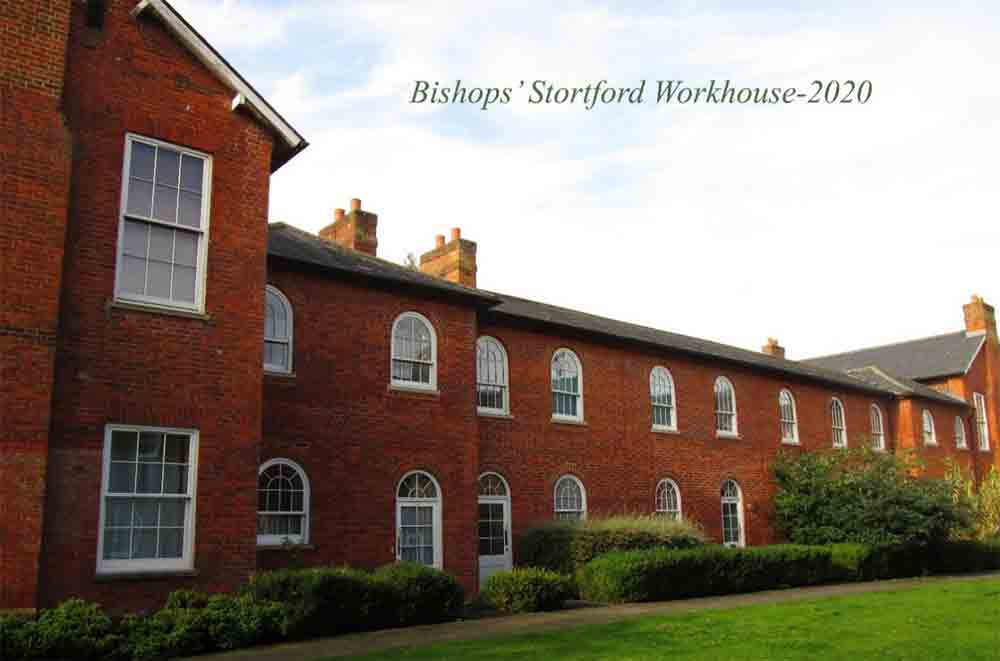
Fig 2: Current view of the former Bishops Stortford Workhouse, opened in 1837 (now up-market residential accommodation).
© Saffron Walden Historical Society
- Bishop’s Stortford 30 May 1893: Margaret Rickett & her 4 children. ‘Margaret Rickett & her 4 children having again become chargeable the clerk was instructed to ask the Saffron Walden Union to accept the paupers without Justice Order & if necessary to obtain Justice Order for their removal to that Union
- Bishop’s Stortford 13 June 1893. Settlement. Margaret Rickett & her 4 children. A letter of the clerk to the Saffron Walden Union on the 9th inst. agreeing to accept Margaret Rickett and her 4 children was read but, as they had left the Workhouse no order was made .20
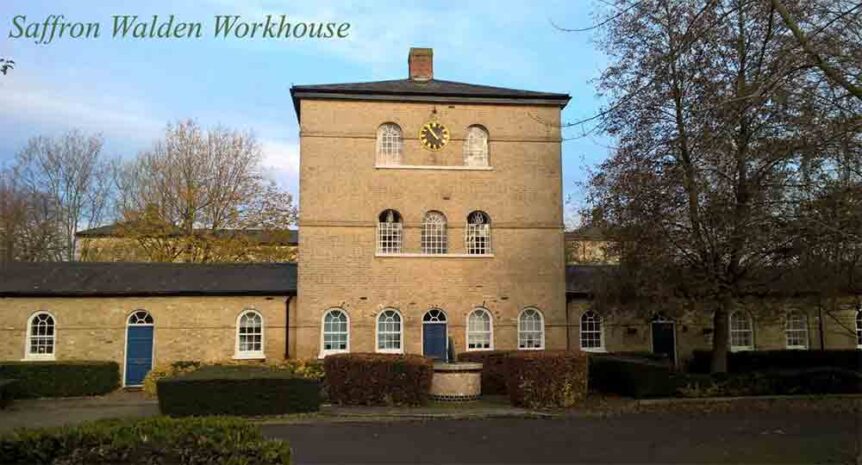
Fig 3: See featured image for a modern view of the former Saffron Walden Workhouse, opened in 1836 (now The Spike apartments). © Saffron Walden Historical Society
Evidently some time after these incidents Margaret targeted another agricultural labourer, George Baker who was an unmarried bachelor aged 38 and they moved into a cottage in Berden. George had been baptised on 17 June 1855 at St Mary the Virgin Church, Tilty, Essex, the son of John James, a blacksmith, and Ann Collins.21 In the 1871 Census George was living with his parents at 2 Baldwins Road, Broxted as an agricultural labourer.22 He was still living with his parents at Benfield End, Stansted in 1881 as an agricultural labourer and in 1891 as a farm labourer.23
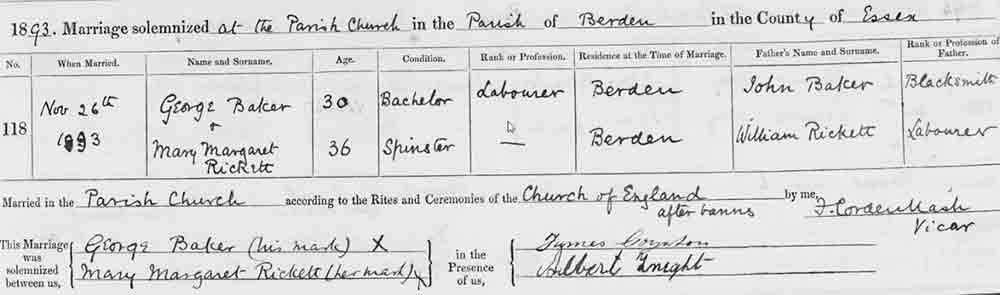
We then came across this somewhat remarkable marriage entry, from which we can only assume that Margaret and George Baker were already aware of the up-and-coming court case and, in their ignorance, thought by being married things would be seen in a better light (Fig. 4).
It is notable that when arraigned in December Margaret was still classified as a single woman. Mary Margaret Rickett (father William a labourer) married George Baker (father John a blacksmith) 26 November 1893 in Berden. He said he was 30 years and she said she was 36 years old. Both signed with their marks.24
Cruelty to children
This leads us on to the court case which we discovered whilst researching other material in Saffron Walden Library (see below). It was reported in the Saffron Walden Weekly News with the heading: ‘CRUELTY TO CHILDREN AT BERDEN – Shocking Disclosures ’, and headlined in the Essex Newsman on Saturday 2 December 1893 with ‘HEARTLESS CRUELTY TO CHILDREN AT BERDEN – An Awful Case’.25 The small village of Berden, mentioned in the court case, was at that time in the Rural Sanitary District of Bishop’s Stortford (6 miles), but the Parliamentary Division of Saffron Walden (8.2 miles).
 CRUELTY TO CHILDREN AT BERDEN – SHOCKING DISCLOSURES

At the Saffron Walden County Bench on Tuesday, Margaret Ricketts (25) single woman, and George Baker (40) labourer, both of Berden were charged with having four children in their custody of the ages of two, five, 10 and 14 years, and neglecting and exposing them in a manner injurious to their health’s, on the 13th November and subsequent dates.
Mr. Clarke Hall, barrister, presented on behalf of the National Society for the Prevention of Cruelty to Children. Inspector Hayes of the same Society was also present.
Inspector Hayes N.S.P.C.C. said: I visited defendants on the 13th of this month at Berden. I saw the woman and the four children. She was impertinent and would not answer questions. She told me to go to the Church for it.  She called the male defendant down. I went upstairs. The stench was abominable and there was not a vestige of furniture of any kind. There were three or four empty sacks for bedding and several cast off garments that appeared to be used for covering. –cont’d
There was no furniture upstairs or down in the whole cottage! - Not a stool to sit upon. The children were dirty, ragged and filthy; their hair was matted together, and they had no shoes on. The child in the woman’s arms was in a different condition now to then. She was washing. There were two loaves, a little tea and margarine in the cupboard. I told her the terms of the Act, she was breaking, and she said “I do not care; I have been to prison before, and can go again.” I called upon Mr. Seabrook  and he accompanied me to the cottage.
Arthur Seabrook, a farmer, said: I went with the last witness to see the family in question. I found them in a deplorable state; as bad as possible. The house smelt very bad, which arose from filthiness. The children were badly clad, they are clothed better now. I believe the man hires the house of Mr. Stock Bush, of Clavering.
P.C. Mules said: I have known the woman for five years, and known her to be of the worst description.  She dragged the children about. I have removed her and the children to the Workhouse twice. On May 8th I took them there. On the 24th they came back again. I found them all under a hedge. It was raining. The children were in a wretched condition, covered in excrement, and with a skin disease. I conveyed them to the Workhouse again on the 29th May. They have been back to Berden again about seven weeks. I visited her on the 6th November when the children were in a filthy state.   They were so black you could not see the colour of their skin! There were only three hard crusts, a screw of tea, and about half an ounce of margarine in the house. No other food in the house. The man was living with her without work during the whole of that time, and lived on what the children and woman got by begging! I have had complaints made about their begging.  I have seen both the man and the woman dragging the children to Stansted and Bishop’s Stortford. Last Sunday fortnight was the last time I saw them together. I have heard the woman use awful threats to the children, and say she would jam their insides up into their throats, and I also heard her tell the boy that she would smash his brains out! She has often told me that she would not stay in the Workhouse.
The Female Defendant (Margaret Ricketts): More I wouldn’t, I know my children’s ages as well as you do Mr. police constable.
Sergeant Kemp: I have known the male prisoner for a year and 10 months. He follows no constant employment and leads a disorderly life. Twelve months ago I ejected the female from a house in Henham. Their house was in a most wretched condition.
Mrs Hammond said: I have known the family seven weeks, and the woman I have known by the name of Ricketts. I know the house to be in a filthy condition. I have seen the children about begging.
At this point the woman (Ricketts) was very noisy and said she would not be quiet.
Witness (continuing): I never heard such fearful language as the woman uses to her children.
Defendant (Margaret Ricketts): You false woman. How can you stand there and tell those lies? If I was outside I’d give her something. It’s not my place to keep the children. It is my husband’s place. He keeps a gun and gets what he wants by that. I was forced to lay my children under the hedge.
The male defendant (George Baker) said he gave her 10s a week when he was in work.
The Bench committed both defendants to gaol for two months with hard labour, and ordered the removal of the children to the Workhouse, during the time the Society was considering what should be done for their future safety.
 Saffron Walden Weekly News Friday 1 December 1893
Saffron Walden court case
– those mentioned include: William Clarke Hall (later Sir) barrister-at-law of Upminster, born 1866, married to the artist Lady Edna nee Waugh (see National Portrait Gallery); Arthur Seabrook, farmer aged 38 in 1891, living with his widowed mother Emma at The Cottage, Berden Village (ERO D/P 397/1/3);-
Thomas Stock Bush of Bridge End, Clavering (1.8 miles from Berden) retired carpenter, farmer & landowner aged 69 in 1891, living with wife Sarah (ERO D/P 1); Police Constable Henry Mules aged 25 in 1891, stationed in Manuden (3 miles from Berden), with wife Elizabeth (ERO D/P 397/1/3); Mary Hammond, widow aged 69 in 1891, of Little London, Berden (ERO D/P 397/1/3).
So what became of this family? In 1901 George Baker (stated as single) aged 45, an agricultural labourer (born in Broxted) was lodging at The Kings Head Inn, Great Dunmow.26 Then in 1911 a George Baker, farm labourer, born in Tilty aged 57, a married man, was in Dunmow Union Workhouse.27
Under the 1889 Act provision was made for children whose mother was imprisoned: ‘if satisfied on inquiry that it is expedient so to deal with the child, may order that the child be taken out of the custody of such person (i.e. Margaret) and committed to the charge of a relation of the child, or some other fit person named by the court…’ With both of Margaret’s parents dead as well as her sister, we can only presume the Rickett/Lindsell/Baker children were separated before being dispersed, following a preparatory stay in Saffron Walden Workhouse. We certainly could not locate them in the censuses of 1901 or 1911.
As to Margaret we do not know what happened to her – was she Margaret or Mary? Was her surname Rickett, Lindsell (Lindsall) or Baker? Try as we might we have not been able to track her after her release from gaol in 1894. Did she manage to regain custody of her children (unlikely) or maybe, being rid of them, she found another bachelor to move in with and used his name?
This case certainly vindicates the Reverend Benjamin Waugh’s unstinting and dedicated effort to protect and nurture children at that time. Local police forces were instructed to assist and allow the NSPCC representative to take over in such instances. We can only hope that the children eventually found a better life; probably the younger two would not remember much anyway. It is possible that a descendant of the family will read this and have some good news about what happened to the principal characters in this tale.
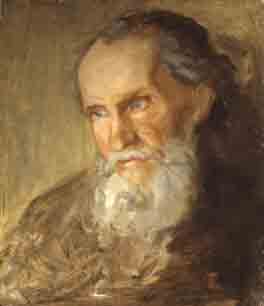
Finally, this portrait of the Rev Benjamin Waugh was painted as a tribute by his daughter Lady Edna Hall, wife of William Clarke Hall, mentioned in the above case.
It is currently in the National Portrait Gallery collection. Furthermore there are 4 Commemorative Plaques in his honour (3 in Greater London and one in his birth place of Settle).
The Rev Waugh died in 1908 aged 69 at Runwell Terrace, Westcliff on Sea in Essex. He is buried in the Southend Borough Cemetery.
© National Portrait Gallery
References
1.Saffron Walden Reporter 12 December 2019, p.8.
2.Legislation.gov.uk
3.Essex Record Office (ERO) D/P 1/1/10.
4. ERO D/P 269/1/5.
5. ERO D/P 1/1/15.
6. ERO D/P 1/1/10.
7. ERO D/P 1/1/15.
8. UK Census 1871 RG 10/1707.
9. UK Census 1881 RG 11/699.
10. ERO D/P 1.
11. ERO D/P 242/1/22.
12. ERO D/P 1
13. UK Census 1891 RG 12/1431.
14. ERO D/P 269/1/5.
15. UK Census 1871 RG 10/1707; 1861 RG 9/1120; 1881 RG 11/1816.
16. ERO D/P 1/1/15.
17. Govt Record Office June Qtr. 4a 704.
18. ERO/P 269/1/5.
19. UK Census 1901 RG 13/1733
20. Hertfordshire record Office (HALS) -Film Ref: BG/BIS/18 & /19; Saffron Walden Union Workhouse minutes (page 119) – Archive Access Point, Saffron Walden Library.
21. Essex Record Office SEAX No. D/P 397/1/3.
22. UK Census 1871 RG 10/1706.
23. UK Census 1891 RG 12/1097.
24. ERO D/P 104/1/6.
25. The Essex Newsman 1893 & Saffron Walden Weekly News 1893, by courtesy Saffron Walden Library.
26. UK Census 1901 RG 13/1730.
27. UK Census 1911 21-22/10450.
Note: The authors are members of the North West Essex (Saffron Walden) branch of the Essex Society for Family History. {update-the branch closed in September 2021}
Images: With thanks to Essex Record Office: extracts from parish registers- Fig. 1 ERO D/P 1/1/10 & Fig. 4 ERO D/P 104/1/6. Portrait- © National Portrait Gallery
Court Case extract from Saffron Walden Weekly News, by courtesy of Saffron Walden Library.